
For small and mid-sized businesses, the most important digital battleground isn't global-it's right outside your front door. Winning the crucial 'near me' searches, dominating the Google Maps pack, and becoming the go-to provider in your service area all hinge on one critical discipline: local search engine optimization. In a market where 46% of all Google searches have local intent, simply having a website is no longer enough. Your online presence must be meticulously engineered to capture the attention of customers actively seeking services in your immediate vicinity.
But with countless conflicting tips and outdated strategies online, identifying what actually moves the needle can be overwhelming. This guide cuts through the noise. We've compiled the 10 best local SEO practices that deliver tangible, measurable results for businesses aiming to increase foot traffic, phone calls, and form submissions. Forget vague theories and generic advice; this is a comprehensive, actionable roadmap designed for immediate implementation.
Here, you will find a prioritized roundup of the top strategies, from mastering your Google Business Profile to leveraging local schema for a competitive edge. Each practice is broken down into:
- Why It Matters: The strategic importance behind the action.
- Step-by-Step Implementation: Clear, direct instructions to get it done.
- Tools & Examples: Practical resources and real-world scenarios.
- Key Metrics: How to measure success and prove ROI.
This isn't just a list; it's a blueprint for transforming your local search visibility and driving sustainable growth. Let's begin.
1. Google Business Profile Optimization
Your Google Business Profile (GBP) is the cornerstone of any effective local SEO strategy. This free, powerful tool from Google is what enables your business to appear in the coveted "Local Pack" (the map results at the top of a search page) and the Knowledge Panel (the detailed box on the right side of search results). For a San Diego business, a fully optimized GBP is often the primary driver of local calls, website visits, and in-person foot traffic.
Think of your GBP as a digital storefront. It’s frequently the first impression a potential customer has of your business. Failing to claim, verify, and meticulously complete your profile is like leaving your physical storefront with a broken sign and locked doors. One of the best local seo practices is to treat your GBP with the same care as your actual website homepage.
Why It's Foundational for Local SEO
An optimized GBP directly impacts your visibility and credibility. Google uses the information in your profile to determine your relevance for location-based searches like "plumber in North County" or "best tacos near me." A complete and active profile signals to Google that your business is legitimate, operational, and worthy of being shown to searchers. For instance, local dental practices in the San Diego area with comprehensive GBP listings, including services, photos, and consistent reviews, often see a significant increase in appointment requests directly from search.
Actionable Implementation Steps
Claim and Verify:
Start by claiming your profile at google.com/business. You'll need to verify ownership, which is typically done via a postcard mailed to your business address. This is a non-negotiable first step.
Complete Every Section:
- NAP Consistency: Ensure your Name, Address, and Phone number are identical across your website and all other online directories.
- Categories: Choose the most accurate primary category and add relevant secondary categories. A home service contractor might use "Plumber" as a primary and "Water Heater Installation & Repair" as a secondary.
- Services/Products: List every service you offer with descriptions. This helps you rank for more specific long-tail keywords.
- Photos & Videos: Upload high-quality photos of your storefront, team, and work. Aim for at least 10-15 images.
- Attributes: Select all applicable attributes, such as "wheelchair accessible," "offers online booking," or "women-owned."
Ongoing Management and Optimization
Your GBP isn't a "set it and forget it" tool. Continuous management is key.
- Respond to Reviews: Engage with all reviews, both positive and negative, within 24-48 hours.
- Use Google Posts: Share updates, offers, and events weekly. These posts appear directly on your profile and can drive immediate action.
- Answer Q&A: Proactively add and answer common questions in the Q&A section to control the narrative and provide helpful information.
2. Local Citation Building and Directory Listings
Beyond your own website and GBP, your business's online footprint across the web is a major local ranking factor. Local citations, which are online mentions of your business's Name, Address, and Phone number (NAP), serve as third-party verifications of your existence and location. These mentions on directories like Yelp, industry-specific sites, and local business association pages build a web of trust signals that Google’s algorithm values highly.
Think of each accurate citation as a vote of confidence for your business's legitimacy. When Google consistently finds the same NAP information across dozens of reputable websites, it becomes more certain that your business is who and where you say you are. For a competitive market like San Diego, a robust and consistent citation profile is one of the best local SEO practices for differentiating yourself from competitors with a weaker online presence.
Why It's Foundational for Local SEO
Consistent and accurate citations directly support your local ranking efforts by reinforcing the data in your Google Business Profile. Inconsistencies, such as an old address or a wrong phone number on a major directory, create confusion for both search engines and potential customers, which can harm your visibility. For instance, a San Diego home services contractor with consistent listings on Yelp, HomeAdvisor, and Angie's List not only gains referral traffic but also strengthens their authority, helping them rank higher in the Local Pack for key service queries.
Actionable Implementation Steps
Audit and Clean Up:
Start by auditing your existing citations using a tool like Whitespark or BrightLocal. These platforms will find your current listings, identify NAP inconsistencies, and pinpoint duplicate profiles that need to be removed.
Build and Standardize:
- NAP Consistency: Your Name, Address, and Phone number must be identical everywhere, down to the last detail (e.g., "St." vs. "Street"). This is non-negotiable.
- Prioritize Key Directories: Focus on high-authority, general directories (Yelp, Apple Maps, Bing Places) and niche-specific sites. A local law firm should be on Avvo and FindLaw, while a medical practice needs listings on Healthgrades and Zocdoc.
- Enrich Your Profiles: Don’t just list your NAP. Add comprehensive business descriptions, hours of operation, photos, services, and payment methods to every profile.
- Manual vs. Automated: While automated services can distribute your information quickly, manually claiming and optimizing your top 20-30 most relevant directories often yields better, more detailed results.
Ongoing Management and Optimization
Your citation profile requires regular maintenance to remain a strong asset.
- Monitor for Inaccuracies: Set up a monthly or quarterly schedule to check your key listings for any changes or new, incorrect data that may have been automatically generated.
- Update Immediately: If your business moves, changes its phone number, or rebrands, updating your citations must be a top priority, second only to updating your website and GBP.
- Leverage Review Sites: Encourage happy customers to leave reviews on your key directory profiles, as this activity signals to both users and search engines that your business is active and trusted.
3. Local Content Strategy and Geo-Targeted Keywords
While your Google Business Profile gets you on the map, a targeted local content strategy ensures you dominate the organic search results for what your customers are actually typing into Google. This practice involves creating content specifically optimized for local search intent, using keywords that include location modifiers like "Escondido plumber" or "Chula Vista DUI defense." It's about moving beyond generic service pages to capture high-intent local traffic.
Think of it as speaking your customers' language. When someone needs a service urgently, they search with location in mind. A robust local content strategy, incorporating service pages, blog posts, and landing pages for specific neighborhoods, is one of the best local seo practices because it directly answers these geo-specific queries, establishing your business as the go-to authority in that area.
Why It's Foundational for Local SEO
Geo-targeted content signals hyper-relevance to search engines. When you create a page dedicated to "HVAC repair in Encinitas," you're telling Google that you don't just serve San Diego County; you are an expert in solving HVAC problems specific to Encinitas residents. This focus builds topical and geographic authority, helping you outrank competitors who rely on a single, generic service page. For instance, a home services business with a blog post on "Common Slab Leak Issues in Poway Homes" is far more likely to attract qualified leads from that area than one with a general "Slab Leak Repair" page.
Actionable Implementation Steps
Identify Local Keywords:
Use tools like Semrush or Ahrefs to find what your customers are searching for. Look for variations of "[service] + [city/neighborhood]" and question-based keywords like "how much does [service] cost in [city]."
Build Geo-Targeted Pages:
- Location Pages: If you have multiple offices, create a unique page for each one. Include the local address, phone number, hours, staff bios, and customer testimonials from that area.
- Service-in-Location Pages: Create pages for your core services combined with a specific location (e.g., "Dental Implants North County"). This is highly effective for single-location businesses serving multiple neighborhoods.
- Local Blog Content: Write articles that solve local problems. A roofer could write about "Choosing the Right Roof for San Diego's Coastal Climate."
Ongoing Management and Optimization
Local content requires consistent effort to remain effective and relevant.
- Refresh Content Quarterly: Update your location pages with recent projects, local events you’ve sponsored, or new testimonials.
- Internal Linking: Link from your city-specific blog posts back to your main service and location pages to distribute authority.
- Analyze Performance: Use Google Search Console to monitor which geo-targeted keywords are driving traffic and use that data to inform your future content strategy.
4. Review Generation and Reputation Management
In local SEO, customer reviews are the new word-of-mouth. Actively generating reviews on platforms like Google, Yelp, and industry-specific sites creates powerful social proof that influences both potential customers and search engine rankings. Google’s algorithm explicitly considers review quantity, velocity (recency), and sentiment when ranking local businesses, making this one of the most impactful local seo practices you can implement.
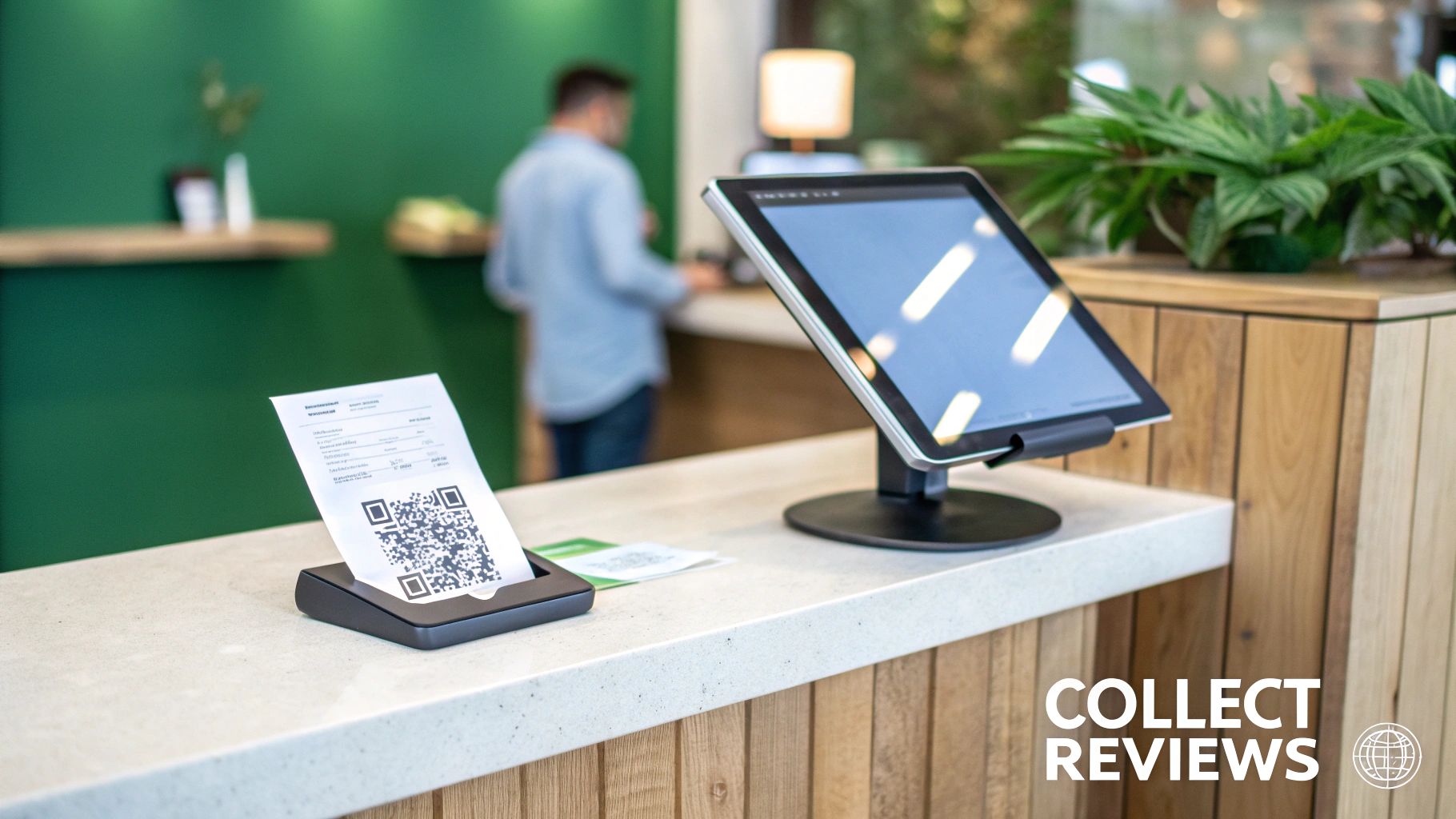
Think of reviews as a direct signal of your business's quality and relevance. A steady stream of positive feedback tells search engines that you are an active, trusted entity worth showing to local searchers. For instance, a San Diego dental practice that generates 10+ new reviews monthly through automated post-visit emails can maintain a top Local Pack position and see a direct increase in new patient inquiries.
Why It's Foundational for Local SEO
Reviews directly build trust and authority. According to industry studies, the vast majority of consumers trust online reviews as much as personal recommendations. A high rating and a large volume of recent reviews can be the deciding factor that pushes a customer to choose you over a competitor. This user engagement signals to Google that your business provides a valuable experience, which can directly boost your map and organic search rankings.
Actionable Implementation Steps
Create a Systematic Request Process:
Don't leave reviews to chance. Implement a process to ask for feedback at the moment of peak customer satisfaction, such as after a service is completed or a product is delivered.
Lower the Friction:
- Direct Links: Create a short, easy-to-remember link that goes directly to your Google review page.
- QR Codes: Place QR codes on invoices, business cards, or in-store signage. A home services contractor can put a QR code on their final invoice, making it simple for a happy client to leave a review on the spot.
- Automation: Use email or SMS marketing tools to send automated review requests 24-48 hours after a transaction. Platforms like Podium or BrightLocal can streamline this.
Ongoing Management and Optimization
Your reputation requires active management, not just passive collection. This ongoing effort shows both customers and Google that you are engaged and attentive.
- Respond to All Reviews: Acknowledge every review, both positive and negative, within 24 hours. Thank positive reviewers and address negative feedback professionally.
- Handle Negative Reviews Strategically: For a negative review, take the conversation offline. Offer a direct contact to resolve the issue privately. Once resolved, you can post a public reply detailing the positive outcome.
- Train Your Team: Empower your staff to verbally ask satisfied customers for a review at the end of a positive interaction.
5. Local Link Building, Community Engagement, and Relationship-Based PR
While on-page SEO focuses on your own website, local link building is about earning "votes of confidence" from other reputable local websites. These incoming links, or backlinks, from other San Diego and North County sites are a powerful signal to Google that your business is a legitimate and authoritative part of the local community. It’s the digital equivalent of word-of-mouth marketing, building trust with both search engines and potential customers.
Think of it this way: when a well-respected local institution like the San Diego Regional Chamber of Commerce or a popular local blogger links to your website, they are vouching for you. This is one of the best local seo practices because it fundamentally proves your local relevance. For example, a home services contractor who sponsors a local Little League team might earn a link from the team’s website and local news coverage, directly helping them rank for neighborhood-specific searches.
Why It's Foundational for Local SEO
Local links directly influence your website's domain authority and its ability to rank for competitive local keywords. Google's algorithm interprets a link from a known local entity as a strong indicator of your business's physical connection to the area. This helps differentiate you from national brands and builds a "local trust" signal that is difficult to fake. For instance, a San Diego tech startup that earns links from local business journals and tech publications through thought leadership content solidifies its authority and local visibility.
Actionable Implementation Steps
Map and Prioritize:
Begin by creating a list of local organizations, chambers, business associations, and publications relevant to your industry. Prioritize high-authority sites like local news outlets and industry groups over low-value directories.
Engage the Community:
- Sponsorships: Develop a sponsorship and partnership strategy aligned with your brand values. Sponsoring local events, sports teams, or nonprofit fundraisers often results in valuable backlinks.
- Partnerships: Collaborate with complementary, non-competing local businesses on promotions or events, and ensure you cross-link to each other's websites.
- Expertise: Use services like Help A Reporter Out (HARO) to respond to queries from local journalists seeking expert sources. This can lead to high-quality media mentions and links.
Create Link-Worthy Content:
- Local Guides: Develop comprehensive guides, such as "The Ultimate Guide to Dog-Friendly Patios in North County," that naturally attract links from local bloggers and directories.
- Data & Research: Compile original research or data reports that tell a local story, making your business the primary source for that information.
Ongoing Management and Optimization
Local link building is an ongoing effort based on genuine relationship building.
- Nurture Relationships: Stay in touch with the local journalists, bloggers, and community leaders you connect with.
- Document Involvement: Keep a record of all community engagement and partnerships for repurposing on your blog and social media.
- Monitor Backlinks: Use tools like SEMrush or Ahrefs to track new backlinks and identify new opportunities based on where your local competitors are getting links.
6. On-Page SEO and Technical Optimization for Local Search
While your Google Business Profile acts as your digital front door, your website is the foundation upon which your entire local online presence is built. On-page and technical SEO are the practices that ensure this foundation is solid, accessible, and easily understood by search engines. It involves optimizing individual web pages (on-page) and your site’s backend infrastructure (technical) to rank higher and earn more relevant traffic from local searches.
Think of your website as your central business hub. Proper technical optimization ensures Google’s crawlers can navigate it efficiently, while strong on-page signals tell them exactly what your business does and where it operates. Neglecting this is like having a beautiful office building with confusing hallways and no signs; customers (and search engines) will get lost and leave. For local businesses, incorporating these as part of the best local seo practices is non-negotiable for sustainable growth.
Why It's Foundational for Local SEO
A technically sound and well-optimized website directly influences how Google perceives your authority and relevance for local queries. Factors like site speed, mobile-friendliness, and structured data (schema) are critical ranking signals. A home services company in San Diego, for instance, saw a 45% increase in local conversions after improving its Core Web Vitals, proving that a better user experience leads to better business outcomes. Google rewards websites that provide a seamless, fast, and clear experience to its users, especially on mobile devices where most local searches happen.
Actionable Implementation Steps
Audit Your Technical Health:
Use tools like Google PageSpeed Insights and GTmetrix to benchmark your site speed and identify performance bottlenecks. Check your Core Web Vitals report in Google Search Console for real-world user experience data.
Implement Local Schema Markup:
- LocalBusiness Schema: Add this to your homepage and location pages. Include your precise NAP, business hours, and service areas to give Google explicit information about your local business.
- Service Schema: Use this on individual service pages. Detail what the service is, its price range, and the specific area it's offered in.
- Review Schema: Use AggregateRating to display your star ratings directly in search results, building immediate trust. Test all schema with Google's Rich Results Test before publishing.
Prioritize Mobile-First Design:
Your website must provide an excellent experience on a smartphone. Responsive design is essential, as Google predominantly uses the mobile version of a site for indexing and ranking. As detailed in this guide on why responsive web design matters for SEO, a mobile-first approach is central to modern search visibility.
Ongoing Management and Optimization
Technical and on-page SEO require consistent attention to maintain performance and adapt to algorithm changes.
- Conduct Regular Audits: Use a tool like Screaming Frog to crawl your site quarterly to find broken links, redirect issues, or missing metadata.
- Optimize Image Alt Text: Use descriptive alt text that includes location and service keywords (e.g., "emergency plumber in North County San Diego") to rank in local image searches.
- Refine Internal Linking: Ensure your most important location and service pages receive internal links from other relevant pages on your site to pass authority and signal their importance.
7. Local Video Content and Visual Storytelling
Video is no longer just a "nice to have" for marketing; it's a powerful and essential component of modern local SEO. From customer testimonials and service demonstrations to neighborhood guides and team introductions, video content builds unparalleled trust and explains your value proposition in a highly engaging format. This approach is one of the best local seo practices because it humanizes your brand, making potential customers feel connected to you before they even pick up the phone.
Think of video as a way to answer your customers' most pressing questions visually. For a local business, this could be showing the result of a kitchen remodel or having a happy client share their experience. Video content not only converts viewers at a higher rate but also provides powerful signals to search engines that your content is valuable and relevant.

Why It's Foundational for Local SEO
Video content directly impacts local rankings through engagement signals. When users spend more time on your website watching a video, it tells Google that your page is a high-quality resource. Furthermore, properly optimized videos on platforms like YouTube can rank in search results themselves, giving you another opportunity to capture local traffic. For instance, a San Diego home services company that creates before-and-after project videos can start ranking for hyper-local searches like "best bathroom remodel in La Jolla."
Actionable Implementation Steps
Plan Your Content Strategy:
Start with high-impact, low-effort ideas. Customer testimonials are often the best place to begin, as they provide authentic social proof.
Optimize for YouTube and Google:
- Keywords: Use local keywords in your video title, description, and tags (e.g., "North County HVAC Repair Tips").
- Thumbnails: Create compelling, custom thumbnails that encourage clicks.
- Descriptions: Write detailed descriptions that include your NAP (Name, Address, Phone Number), a link to your website, and relevant service information.
Integrate Video on Your Website:
- Embed Strategically: Place videos on relevant service and location pages. A video about dental implants should be on your dental implant service page.
- Schema Markup: Add video schema markup to your pages. This helps Google understand the video content and can lead to rich snippets in search results. For a deeper understanding of how professional videography can be integrated into your marketing, explore these insights on story-driven video production with SEO optimization.
Ongoing Management and Optimization
Building a video presence is an ongoing effort that yields compounding returns. A consistent publishing schedule helps build authority on platforms like YouTube and keeps your audience engaged.
- Repurpose Content: Turn longer videos into short clips for social media platforms like Instagram Reels, TikTok, and YouTube Shorts.
- Create Playlists: Organize your YouTube videos into themed playlists, such as "Customer Success Stories" or "DIY Home Maintenance Tips," to encourage binge-watching.
- Analyze Performance: Monitor metrics like watch time, audience retention, and click-through rate to understand what content resonates with your local audience and refine your strategy.
8. Local Mobile Optimization and 'Near Me' Search Strategy
With over 75% of local searches now happening on mobile devices, optimizing for the on-the-go user is no longer optional; it's essential. This goes far beyond just having a "responsive" website. True mobile optimization is a dedicated strategy designed to capture high-intent users who are actively searching for solutions "near me" and are ready to take immediate action, whether that's calling, visiting, or booking.

For a San Diego business, failing to optimize for mobile is like ignoring a line of customers standing right outside your door. These "near me" searches are incredibly valuable because they carry immediate transactional intent. When someone searches for "emergency dentist near me" or "coffee shops in La Jolla," they are looking for a solution right now. This focus on mobile is one of the best local seo practices for driving direct, measurable foot traffic and leads.
Why It's Foundational for Local SEO
Google's mobile-first indexing means the mobile version of your site is the primary one it uses for ranking and indexing. A poor mobile experience directly hurts your visibility across all devices. An excellent mobile experience, however, sends strong positive signals to Google, especially for proximity-based "near me" queries. A San Diego restaurant that ensures its mobile site has a click-to-call button and an easily accessible menu is far more likely to capture a dinner reservation from a mobile search than a competitor whose site is slow and difficult to navigate.
Actionable Implementation Steps
Prioritize Mobile Page Speed:
Your site must load quickly on a mobile network, not just on Wi-Fi. Aim for a load time under 2.5 seconds. Use tools like Google's PageSpeed Insights to diagnose and fix issues.
Simplify Navigation and Calls-to-Action:
- Prominent CTAs: Place key action buttons like "Call Us Now" or "Get Directions" above the fold where they are immediately visible without scrolling.
- Thumb-Friendly Design: Ensure buttons and links are large enough to be easily tapped.
- Streamlined Menus: Use a "hamburger" menu to hide secondary navigation items, keeping the interface clean and focused on primary user goals.
Integrate Location-Based Features:
- Click-to-Call: Make your phone number a clickable link so users can call you with a single tap.
- Embedded Maps: Embed a Google Map with a direct link to directions on your contact and location pages.
- Local Business Schema: Implement structured data to explicitly tell search engines your location, hours, and services, which helps you appear in rich results for "near me" searches.
Ongoing Management and Optimization
Your mobile strategy requires continuous refinement to stay effective.
- Test on Real Devices: Don't rely solely on browser emulators. Regularly test your website's user experience on various actual smartphones and tablets.
- Analyze Mobile Behavior: Use Google Analytics to monitor how mobile users interact with your site. Identify drop-off points in the user journey and optimize those pages.
- A/B Test Mobile CTAs: Experiment with different calls-to-action (e.g., "Book Now" vs. "Schedule Appointment") to see which one converts best for your mobile audience.
9. Local Schema Markup and Structured Data Implementation
While many local SEO practices focus on what users see, schema markup is a powerful tactic that speaks directly to search engines. It's a vocabulary of code (structured data) added to your website's HTML that translates your content into a language Google can easily understand. This code clarifies your business's name, address, services, and operating hours, eliminating any ambiguity for search crawlers.
Think of it as adding descriptive labels to your website's information. Instead of just having "123 Main Street, San Diego" as plain text, schema explicitly tells Google, "This is the street address for this specific local business." This structured communication is one of the best local seo practices for gaining a competitive edge, as it's often overlooked by less tech-savvy competitors but directly influences how you appear in search results.
Why It's Foundational for Local SEO
Properly implemented schema helps Google display your business information in more engaging and informative ways through "rich snippets." These enhanced search results can include star ratings, price ranges, event dates, or FAQs directly on the search page. For a local business, this is invaluable. For example, a home services company in San Diego with correctly installed schema could show its 4.8-star rating and service areas directly in the results, significantly boosting click-through rates and building trust before a user even visits their site.
Actionable Implementation Steps
Generate and Validate:
You don't need to be a coding expert. Use tools like Google's Structured Data Markup Helper or SEO plugins like Rank Math for WordPress to generate the necessary code without writing it from scratch. Always test your code using Google's Rich Results Test tool before publishing.
Implement Key Schema Types:
- LocalBusiness: Add this to your homepage and location pages. Include your full, consistent NAP (Name, Address, Phone), business hours, and geo-coordinates.
- Service: Create individual schema for each of your core services. Include a description, price range (if applicable), and service area.
- FAQPage: Implement this on pages with a frequently asked questions section. This helps you capture valuable real estate in search results by having your questions and answers displayed directly.
- Review/AggregateRating: This schema pulls in your average star rating and review count, displaying it in search results to build immediate credibility.
Ongoing Management and Optimization
Schema isn't a one-time task; it requires maintenance and monitoring.
- Monitor in Search Console: Keep a close eye on the "Enhancements" section in your Google Search Console account. It will report any errors or issues with your structured data implementation.
- Update as Business Changes: If you add a new service, change your hours, or open a new location, ensure you update the corresponding schema on your website immediately.
- Expand Schema Types: As your content evolves, explore other relevant schema types like
Event,Article, orHowToto provide search engines with even more detailed context about your business activities.
10. Local SEO Analytics, Tracking, and Continuous Optimization
Executing a local SEO strategy without tracking performance is like driving a car blindfolded. Local SEO analytics provides the data-driven insights necessary to understand what’s working, what isn't, and where to focus your efforts for maximum impact. This practice involves using tools to monitor key metrics, allowing you to make informed decisions rather than guessing.
For a San Diego business, this means moving beyond vanity metrics and focusing on tangible outcomes like increased Local Pack visibility, more appointment calls from Google Business Profile, and higher foot traffic. One of the best local seo practices is to establish a consistent reporting cadence that connects your marketing activities directly to business growth.
Why It's Foundational for Local SEO
Effective tracking and optimization justify your investment in local SEO and create a feedback loop for continuous improvement. By measuring metrics like local keyword rankings, search impressions, and lead sources, you can prove ROI and refine your strategy. For example, a home services contractor in San Diego could use lead source attribution to discover that GBP Posts drive 40% of their qualified leads, justifying the time spent creating a weekly posting schedule.
This data-driven approach turns your marketing from an expense into a predictable engine for growth. A healthcare provider monitoring their review growth and response rates might see a 15% monthly increase in new patient leads as their online reputation improves, confirming the value of their review management efforts.
Actionable Implementation Steps
Set Up Your Analytics Foundation:
The first step is to connect your core analytics tools. Ensure you have claimed your business and set up accounts for both Google Search Console and Google Analytics.
Define and Track Key Metrics:
- Local Keyword Rankings: Monitor your position in search results for high-intent, location-specific keywords (e.g., "emergency dentist La Jolla").
- Local Pack Visibility: Track how often your business appears in the coveted 3-pack map results for your target search queries.
- GBP Performance: Use GBP Insights to track calls, website clicks, and direction requests originating from your profile.
- Lead Source Attribution: Set up goal tracking in Google Analytics to identify which channels (organic search, GBP, paid ads) are generating the most valuable conversions.
Ongoing Management and Optimization
Your data is only valuable if you use it to make strategic adjustments. Reviewing your analytics should be a regular part of your marketing routine.
- Analyze Performance Data: Set aside time each month to review your dashboards. Look for trends, identify top-performing content, and pinpoint underperforming areas.
- Test and Iterate: Use your findings to guide optimization. If you notice "near me" searches convert at a high rate, create more content targeting these terms.
- Refine Your Strategy: Let the data guide your budget and resource allocation. If organic search is driving high-quality leads, consider investing more in local content creation. For a deeper dive, you can explore some of the top free SEO tools for boosting search rankings to enhance your tracking capabilities.
Top 10 Local SEO Practices Comparison
| Strategy | Implementation Complexity 🔄 | Resource Requirements ⚡ | Expected Outcomes 📊⭐ | Ideal Use Cases 💡 |
|---|---|---|---|---|
| Google Business Profile Optimization | Low–Medium 🔄 (claim & upkeep) | Low ongoing; moderate initial time ⚡ | High local visibility, increased CTR & calls; measurable engagement ⭐⭐⭐⭐📊 | Service-area businesses, immediate local presence |
| Local Citation Building and Directory Listings | Medium 🔄 (research + consistency) | Medium (multiple listings, audits) ⚡⚡ | Improved local rankings and verification; moderate traffic boost ⭐⭐⭐📊 | New businesses, crowded local markets needing trust signals |
| Local Content Strategy and Geo-Targeted Keywords | Medium–High 🔄 (research + creation) | High (ongoing content production) ⚡⚡⚡ | Higher intent organic traffic and conversions over time; supports multi-location SEO ⭐⭐⭐⭐📊 | Multi-location brands, conversion-focused content strategies |
| Review Generation and Reputation Management | Medium 🔄 (process + monitoring) | Medium (automation + response workflows) ⚡⚡ | Increased trust, higher CTRs and lead volume; review-driven ranking gains ⭐⭐⭐⭐📊 | Service industries reliant on social proof (healthcare, contractors) |
| Local Link Building, Community Engagement, and PR | High 🔄 (relationship-driven) | High (time, PR budget, outreach) ⚡⚡⚡ | Strong authority and referral traffic; durable ranking gains long-term ⭐⭐⭐⭐📊 | Brand-building, competitive markets, nonprofits and sponsorships |
| On-Page SEO & Technical Optimization for Local Search | High 🔄 (technical audits & fixes) | Medium–High (dev resources) ⚡⚡⚡ | Better crawlability, mobile UX, faster pages and improved rankings ⭐⭐⭐⭐📊 | Legacy sites, multi-location platforms, sites with speed/UX issues |
| Local Video Content & Visual Storytelling | Medium–High 🔄 (production + optimization) | High (equipment/production or agency) ⚡⚡⚡ | Strong engagement, longer session times, higher conversions from trust ⭐⭐⭐⭐📊 | Testimonial-driven services, visual portfolios, social distribution |
| Local Mobile Optimization & "Near Me" Strategy | Medium 🔄 (mobile-first design) | Medium (design/dev + testing) ⚡⚡ | Immediate-action conversions, better mobile rankings and clicks ⭐⭐⭐⭐📊 | Restaurants, retail, emergency/urgent services, on-the-go searches |
| Local Schema Markup & Structured Data Implementation | Medium–High 🔄 (technical but focused) | Low–Medium (one-time dev) ⚡⚡ | Rich snippets, higher CTRs and improved local understanding ⭐⭐⭐⭐📊 | Any local business seeking quick technical wins for SERP real estate |
| Local SEO Analytics, Tracking & Continuous Optimization | Medium 🔄 (setup + analysis) | Medium (tools + analyst time) ⚡⚡ | Data-driven prioritization, clearer ROI, faster response to changes ⭐⭐⭐⭐📊 | Ongoing SEO programs, agencies, businesses needing attribution |
From Checklist to Competitive Edge: Your Path Forward
You've navigated the essential pillars of a powerful local search strategy, from optimizing your Google Business Profile to implementing sophisticated schema markup. This comprehensive guide details the ten best local SEO practices, but the real challenge-and the greatest opportunity-lies not in knowing what to do, but in consistently executing these tactics as a unified system. Mastering local SEO is less like completing a one-time project and more like training for a marathon; it requires sustained effort, consistent measurement, and strategic adjustments over the long haul.
The journey from being invisible online to becoming the go-to local authority begins with transforming this checklist into a dynamic, living strategy. It’s about creating a flywheel effect where each component amplifies the others. A well-managed GBP sends trust signals that are reinforced by positive customer reviews. That glowing reputation then fuels a local link-building campaign, as other community businesses and organizations become more willing to associate with you. Meanwhile, your geo-targeted content and technically sound website ensure that when customers discover you, they have a seamless and compelling user experience that drives them to convert.
Synthesizing the Strategy: Your Actionable Next Steps
To avoid feeling overwhelmed, approach this as an incremental process. Don't try to overhaul everything at once. Instead, identify your biggest opportunities for immediate impact and build from there.
- Start with Your Digital Storefront: Your Google Business Profile is non-negotiable. If you do nothing else, dedicate time this week to completing every single section, uploading fresh photos, and creating your first Q&A. This is often the lowest-hanging fruit with the highest immediate return.
- Audit Your Online Reputation: Next, focus on reviews and citations. Use a simple tool to check your NAP consistency across major directories and begin a proactive campaign to solicit reviews from recent, happy customers. This builds the social proof that is critical for both search engines and potential buyers.
- Create One Piece of Hyper-Local Content: Brainstorm a single blog post, neighborhood guide, or case study that is deeply relevant to your specific service area. For a San Diego home services company, this could be "The Ultimate Guide to Choosing Drought-Resistant Landscaping in North County." This single asset can attract highly qualified local traffic and serve as a valuable piece for link-building outreach.
The core principle that unites these best local SEO practices is relevance. Google's primary objective is to provide the most relevant, helpful, and trustworthy answer to a user's query. Every action you take-from updating your business hours on Yelp to optimizing your mobile site for "near me" searches-is a signal to Google that you are the most relevant answer for customers in your community.
Building Your Competitive Moat
Ultimately, a robust local SEO strategy becomes a significant competitive advantage that is difficult for others to replicate. While competitors might copy a keyword or build a similar-looking website, they cannot easily duplicate a stellar five-star reputation built over years, a deep backlink profile from trusted local institutions, or a library of genuinely helpful content that has established you as a community expert.
This is the end goal: to build a digital presence so deeply integrated into the local fabric that you become the default choice. It's a commitment to showing up, being helpful, and consistently proving your value to both search engines and the real people they serve. By implementing these practices with diligence and a focus on continuous improvement, you're not just checking boxes on an SEO list; you're building a sustainable engine for predictable, local growth.
If you're a San Diego business ready to transform this comprehensive roadmap into measurable results, Danny Avila specializes in integrating these local SEO practices into a cohesive strategy that also includes web design and video storytelling. Let's work together to build a powerful engine for your local growth and turn your online presence into your greatest competitive advantage. Find out how we can help at Danny Avila.
Article created using Outrank