
In 2026, social media success is defined not by follower counts, but by the community that actively trusts and champions your brand. While vanity metrics like likes and shares offer a surface-level glimpse of performance, true business growth stems from meaningful interactions that convert casual followers into loyal customers. The difference between a passive audience and an engaged community is the difference between broadcasting and connecting. For small and mid-sized businesses, this distinction is critical for building a sustainable, profitable online presence.
This guide moves beyond generic advice to deliver 10 proven social media engagement strategies designed for immediate implementation. We'll bypass abstract theories and dive straight into actionable tactics tailored for marketing leaders and local business owners. You will learn how to build a community-centered content calendar that resonates, create story-driven video that captivates, and launch interactive campaigns that spark genuine conversation. We will also cover integrating paid social ads, leveraging user-generated content, and implementing social listening to foster authentic relationships.
Each strategy is crafted not only to boost your visibility but to build the tangible connections that drive measurable results. Forget simply posting content; it's time to build a system that turns your social media presence from a simple broadcast channel into a powerful engine for lead generation and business growth. Let's explore the specific frameworks that will transform your engagement and, most importantly, your bottom line.
1. Community-Centered Content Calendars
Effective social media engagement strategies begin long before you hit “publish.” A Community-Centered Content Calendar shifts the focus from a purely promotional mindset to one that prioritizes building genuine, two-way conversations with your audience. This approach involves strategically planning your content in 30 to 90-day cycles, mapping themes around your community's needs, local events, and core brand values, rather than just your sales cycle.
This strategic foresight ensures your messaging is consistent and value-driven, transforming your social media profiles from a simple broadcast channel into a trusted community hub. For local service providers, healthcare clinics, and nonprofits, this method is particularly powerful for building the loyalty and trust that drive long-term growth.

How to Implement This Strategy
A successful community-centered calendar balances planned content with spontaneity. Start by identifying your core content pillars, which are the main topics your audience cares about. For example, a local law firm might have pillars like "Community Legal Guides," "Local Business Spotlights," and "Navigating Legal Processes."
Next, map these pillars across your calendar, assigning specific posts to each. A home service company could plan posts about gutter cleaning tips in early fall and HVAC tune-ups in late spring, aligning helpful content with seasonal customer needs. This proactive planning creates a reliable rhythm for your audience.
Actionable Tips for Success
To make this one of your go-to social media engagement strategies, integrate these practices:
- Leave Room for Real-Time: Reserve at least 20% of your calendar for spontaneous content. This flexibility allows you to engage with trending topics, share user-generated content, or react to local news, keeping your feed relevant and dynamic.
- Use Planning Tools: Platforms like Asana, Later, or Buffer are invaluable for visualizing your calendar, scheduling posts across multiple platforms, and collaborating with your team.
- Align Across Channels: Ensure your social media calendar coordinates with your email marketing campaigns and paid ad schedules. Consistent messaging across all touchpoints reinforces your brand identity and improves campaign effectiveness.
- Analyze and Adapt: Review your engagement metrics weekly. Identify which themes and formats (e.g., video tutorials vs. patient testimonials) resonate most, and use that data to refine your upcoming content plans.
2. Story-Driven Video Content & Reels Strategy
Effective social media engagement strategies now hinge on authentic video. A Story-Driven Video and Reels Strategy shifts the focus from hard-sell advertisements to emotionally compelling narratives that showcase your brand’s human side. This approach leverages short-form video on platforms like Instagram Reels, TikTok, and YouTube Shorts to tell stories about customer transformations, behind-the-scenes processes, and the real-world impact of your services.
This strategy is powerful because it builds an emotional connection, making your brand more memorable and relatable. For businesses in healthcare, law, or home services, sharing a client’s journey or a project's before-and-after transformation creates powerful social proof. It hooks viewers with a narrative, not just a product, which platforms reward with significant algorithmic reach.

How to Implement This Strategy
Begin by brainstorming stories, not sales pitches. Instead of a video listing your services, create a Reel showing a 60-second home renovation transformation. A healthcare provider can share a patient's successful recovery journey, focusing on the positive outcome. The key is to highlight the transformation and the human element.
Plan your shoots to maximize content creation. From a single filming session, you should aim to capture enough footage to create 3-5 distinct pieces of content. For example, a nonprofit sharing a volunteer’s story can produce a main testimonial video, several short Reels with powerful quotes, and behind-the-scenes clips for Stories. This approach ensures a consistent flow of high-impact video.
Actionable Tips for Success
To integrate this into your core social media engagement strategies, focus on these practices:
- Hook Viewers Immediately: Capture attention within the first three seconds with a compelling visual, a direct question, or a problem statement your audience relates to.
- Optimize for Mobile: Ensure videos are filmed vertically. Use large, centered text and burn-in captions, as many users watch with the sound off.
- Include Clear Calls-to-Action: Every video should guide the viewer. Add a CTA that directs them to your website, a specific landing page, or a lead form.
- Maintain a Consistent Cadence: Post Reels at least 2-3 times per week. Consistency signals to platform algorithms that you are an active creator, which can boost your visibility. If you're new to the format, learning how to film a high-quality marketing video for social media is a great first step.
- Analyze and Iterate: Track which video lengths, hooks, and formats perform best on each platform. Use these insights to refine your content and inform where to allocate your paid media budget.
3. User-Generated Content & Community Participation
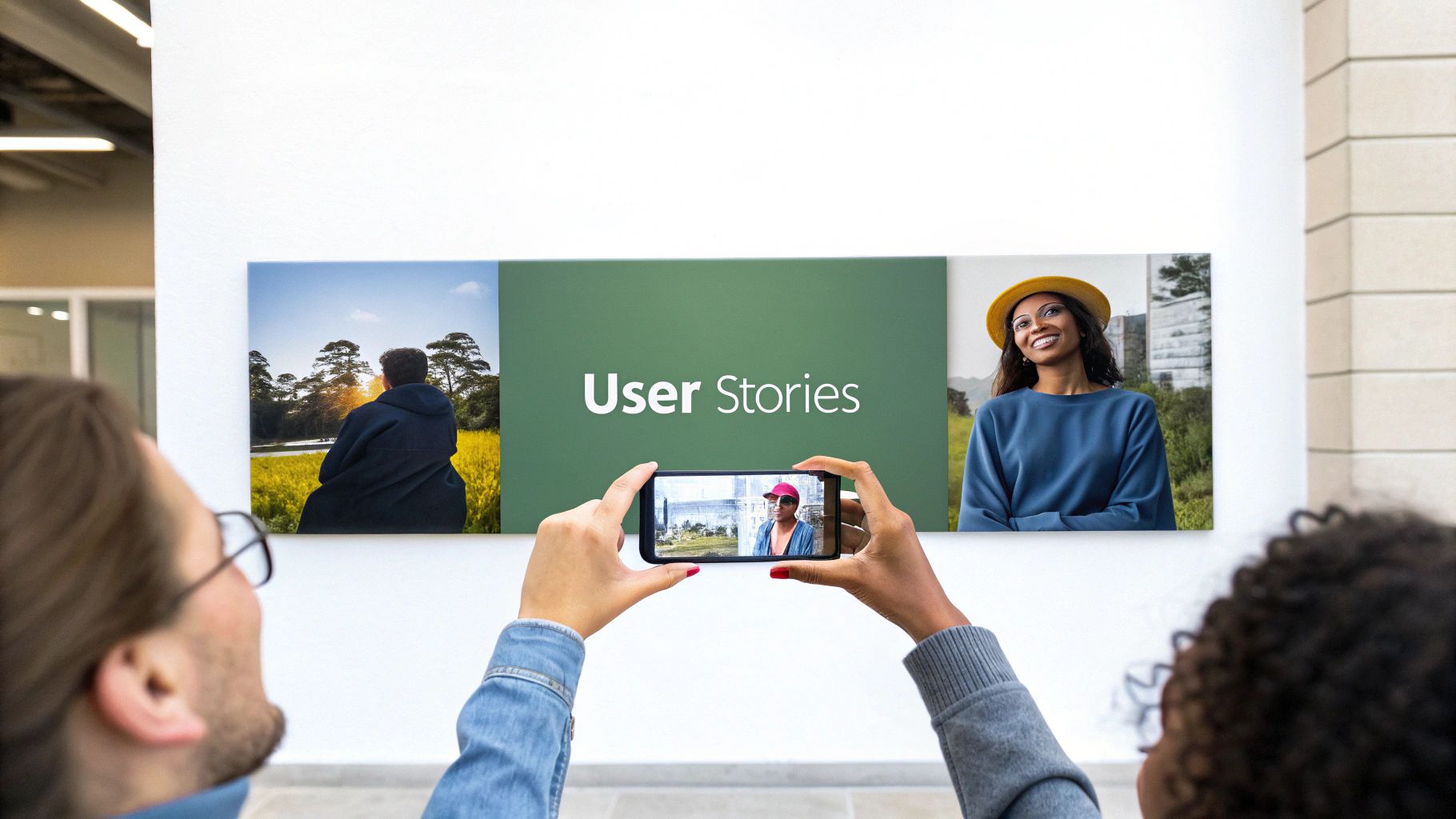
One of the most powerful social media engagement strategies involves empowering your audience to become your storytellers. A User-Generated Content (UGC) and community participation approach encourages customers, clients, and community members to create and share content that features your brand. This transforms satisfied clients into authentic brand advocates, building powerful social proof and extending your reach organically through their networks.
For service-based businesses, UGC is invaluable for building local visibility and trust. When a potential client sees a real person from their community sharing a positive experience, it creates a level of credibility that traditional advertising cannot match. This method turns your social media feed into a dynamic gallery of genuine customer success stories, fostering a deeper, more participatory community connection.
How to Implement This Strategy
To spark community participation, you must make it easy and rewarding. Start by creating a simple, memorable branded hashtag that aligns with your campaign. A home service company, for instance, could launch a contest using the hashtag #BeforeAndAfterTransformation, encouraging customers to share photos of their completed projects. A healthcare provider might request wellness journey photos, while a nonprofit could feature impactful volunteer stories.
The key is to clearly define what you want your audience to share and provide a compelling reason for them to do so. Whether it’s a chance to be featured on your page, win a prize, or simply share their success with a supportive community, the incentive should align with their motivations.
Actionable Tips for Success
To effectively integrate UGC into your social media engagement strategies, follow these best practices:
- Make Participation Effortless: Provide clear submission instructions and a simple hashtag. Create a dedicated landing page or a pinned post on your profiles that outlines the rules and guidelines for participation.
- Offer Meaningful Incentives: Reward contributors with a feature on your page, a discount on future services, or entry into a giveaway. Publicly celebrating participants encourages more people to join in.
- Always Ask and Credit: Before reposting any content, always obtain explicit permission from the original creator. When you share their photo or story, be sure to credit them by tagging their profile in both the image and the caption.
- Engage and Monitor Actively: Monitor your branded hashtags daily. Like, comment on, and share submissions promptly to show your community that you are listening and value their contributions.
4. Paid Social Media Advertising with Clear Offer Strategy
While organic reach is crucial for community building, a paid social media advertising strategy with a clear offer moves beyond general awareness to drive direct, measurable results. This data-driven approach focuses on lead generation and conversions by presenting specific, valuable offers to targeted audience segments across platforms like Meta, TikTok, and LinkedIn. It’s about creating a direct path from ad to action.
This method transforms advertising from a brand-building expense into a predictable revenue driver. For local businesses, this is one of the most effective social media engagement strategies to attract qualified leads. A law firm can run lead generation ads for a "Free Business Structure Guide," or a home service company can offer "$100 Off Your First Service" to lookalike audiences, ensuring every dollar spent is aimed at a tangible business outcome.
How to Implement This Strategy
Success begins with a compelling, low-friction offer mapped to a specific audience need. Instead of a generic "Contact Us" button, create ads promoting a free consultation, a downloadable guide, or an exclusive discount. Each offer should lead to a dedicated, conversion-optimized landing page that reinforces the ad's message and captures lead information seamlessly.
For example, a local healthcare provider could target its service area with ads for a "Free Telehealth Consultation," using Meta's lead forms for instant sign-ups. This unified approach, connecting the ad, offer, and landing page, minimizes friction and maximizes the return on ad spend. By tracking conversions with tools like the Meta Pixel, you gain clear insight into what works.
Actionable Tips for Success
To effectively integrate this paid strategy, focus on precision and measurement:
- Start with a Clear Offer: Remove friction by offering something of immediate value, such as a free guide, a no-obligation audit, or an introductory discount. This accelerates the conversion process.
- Use Dedicated Landing Pages: Never send paid traffic to your homepage. A dedicated landing page for each offer improves conversion rates by providing a focused user experience.
- Set Up Conversion Tracking First: Before launching any campaign, ensure your Meta Pixel, Google Analytics 4, and other tracking tools are properly installed to measure ROI accurately.
- Leverage Lookalike Audiences: Build lookalike audiences from your best customers, email subscribers, or website converters. These audiences often outperform interest-based targeting.
- Retarget Warm Audiences: Run specific campaigns to retarget website visitors, video viewers, and lead form abandoners. These lower-cost ads can re-engage interested prospects and boost overall campaign efficiency. For those just starting, learning how to boost brand awareness with digital marketing is a great first step.
5. Interactive Content & Engagement Campaigns
Passive scrolling is the enemy of engagement. Interactive Content & Engagement Campaigns directly combat this by transforming your audience from passive viewers into active participants. This strategy involves creating content that explicitly asks for user input, such as polls, quizzes, contests, or live Q&A sessions. By requiring a click, a vote, or a comment, you immediately boost key engagement metrics and gather valuable audience insights.
This approach is highly effective because it makes your brand feel more human, approachable, and responsive. For service-based businesses, interactive campaigns are a powerful tool for qualifying leads and building trust. When a user engages with your content, they are signaling interest and opening a door for a deeper conversation, making this one of the most direct social media engagement strategies.
How to Implement This Strategy
The key to successful interactive content is to make participation easy, fun, and rewarding. Start by identifying opportunities to ask for your audience's opinion or test their knowledge. For instance, a healthcare clinic can run a "What health topic should we cover next?" poll on Instagram Stories to guide their educational content. A law firm could host a live Q&A with an attorney to demystify complex topics like business formation.
The goal is to create a feedback loop where your audience's input directly shapes your future content. A home service company could run a "Guess the renovation cost" contest using before-and-after project photos, generating excitement while showcasing their work. This approach not only increases engagement but also provides social proof and highlights your expertise.
Actionable Tips for Success
To make interactive content a cornerstone of your social media engagement strategies, apply these best practices:
- Ask Clear, Simple Questions: Limit each poll or quiz to one specific question. Avoid multi-part questions that can confuse users and lower participation rates.
- Time It Right: Schedule interactive posts and live sessions when your audience is most active. Check your platform's analytics to identify peak engagement times.
- Close the Loop: Always follow up on polls or Q&As. Share the results of a poll in a subsequent post or Story, and thank your audience for their input. This shows you're listening.
- Keep Contests Simple: Design contests with low barriers to entry. Simple mechanics like "follow, comment, and tag a friend" are proven to maximize participation.
- Repurpose Q&A Content: Turn the answers from your live Q&A sessions into a series of short video clips, a detailed blog post, an FAQ page on your website, or an email newsletter.
6. Influencer & Creator Partnerships for Local Authority
Leveraging influencer and creator partnerships is a powerful way to build local authority and tap into established, trusted communities. This strategy moves beyond one-off sponsored posts, focusing instead on building long-term, authentic relationships with local creators, industry experts, and micro-influencers whose followers align with your target audience. It’s about borrowing trust from voices your community already listens to.
For local businesses in San Diego and North County, this approach provides a direct line to engaged potential customers. When a local wellness influencer shares their positive experience with a healthcare provider, or a community leader advocates for a nonprofit's fundraiser, the message carries far more weight than a standard advertisement. These partnerships amplify your reach and wrap your brand in a layer of authentic social proof.
How to Implement This Strategy
Begin by identifying local creators in your niche whose audience mirrors your ideal customer profile. A home service company could partner with San Diego-based interior designers to showcase before-and-after projects, while a law firm might collaborate with a local small business podcaster for an expert interview segment. The key is genuine alignment, not just follower count.
Once you identify potential partners, engage with their content authentically before reaching out with a partnership proposal. Structure the collaboration to be mutually beneficial, offering fair compensation or value in exchange for their creative work. A clear creator brief outlining key messages and goals is essential, but it should also provide enough creative freedom for the influencer to speak in their own voice.
Actionable Tips for Success
To ensure these collaborations are effective social media engagement strategies, follow these best practices:
- Prioritize Engagement Over Followers: Look for creators with high engagement rates (comments, shares, saves) relative to their follower count. A micro-influencer with 5,000 highly engaged local followers is often more valuable than a macro-influencer with 100,000 disengaged ones.
- Verify Audience Authenticity: Use tools like HypeAuditor or Social Blade to analyze an influencer’s follower demographics and check for signs of fake followers or engagement. Ensure their audience is genuinely located in your service area.
- Track Your ROI: Provide partners with unique discount codes, affiliate links, or dedicated landing pages. This allows you to directly measure the traffic, leads, and sales generated from each campaign, proving its value.
- Build an Ambassador Program: For your most successful partnerships, create a long-term ambassador program. This involves recurring collaborations (e.g., monthly posts) that build deeper brand affinity and provide a consistent stream of authentic content.
7. Conversion-Focused Landing Pages & Retargeting Sequences
True social media engagement strategies must bridge the gap between audience interaction and tangible business outcomes. This approach connects high-intent social media traffic to dedicated, purpose-built landing pages, rather than sending users to a generic homepage. By creating a seamless journey from a social ad or post to a specific offer, you dramatically increase the likelihood of conversion.
This unified strategy ensures your message remains consistent and focused, guiding potential customers toward a single, clear action. For service providers, e-commerce brands, and nonprofits, this is how you turn social media "likes" into qualified leads, sales, and supporters. It transforms your social presence from a brand awareness tool into a powerful lead generation engine.
How to Implement This Strategy
The core of this strategy is message matching. The promise made in your social media post, whether it’s a "Free Business Structure Guide" or a "$100 Off First Service" offer, must be the immediate focal point of the landing page. The headline, imagery, and call-to-action (CTA) should directly reflect the content that prompted the click.
For example, a nonprofit’s donation campaign on Facebook should lead to a landing page with clear donation tiers and impact statements, not its main "About Us" page. Similarly, a social ad for a free telehealth consultation should link to a page with a simple scheduling form. This removes friction and keeps the user focused on the intended action, maximizing conversion potential.
Actionable Tips for Success
To make this one of your most effective social media engagement strategies, focus on optimizing the entire user journey:
- Minimize Form Fields: Only ask for essential information on your landing page form (e.g., name, email, phone). Reducing the number of fields required can significantly boost submission rates.
- Maintain Message Consistency: Ensure the headline on your landing page mirrors the promise in your social ad. This psychological principle of consistency builds trust and reduces bounce rates.
- Leverage Social Proof: Place a relevant testimonial or a key performance statistic near your submission form. Seeing positive results from others provides the final nudge a hesitant visitor needs.
- Implement Retargeting Pixels: Install the Meta Pixel or LinkedIn Insight Tag on your landing pages immediately. This allows you to build custom audiences and re-engage users who visited but didn’t convert with targeted follow-up ads.
- Automate Follow-Ups: Create a 3 to 5-step email or SMS sequence that triggers automatically upon form submission. This nurtures new leads by providing value, confirming next steps, or educating them further.
8. SEO-Optimized Social Content & Cross-Channel Amplification
Truly effective social media engagement strategies extend beyond the platform itself, creating a powerful synergy with your overall search engine optimization efforts. This approach treats social media not as an isolated channel, but as a critical component of your digital marketing engine. It involves intentionally creating social content that targets relevant keywords, which then amplifies your website’s visibility and drives qualified organic traffic.
This strategy ensures that your social media activity directly supports your business growth goals by boosting your presence on search engines like Google. For local service businesses, law firms, and healthcare providers, integrating SEO into social content is a game-changer for attracting high-intent customers who are actively searching for the solutions you offer.
How to Implement This Strategy
Begin by conducting keyword research for your core services and location, just as you would for your website. A home service company in San Diego might target "kitchen remodel before and after" or "HVAC tune-up San Diego." Create content around these themes, such as a video Reel showcasing a remodel, and ensure the keyword is in the caption and hashtags.
The next step is amplification. Embed that high-performing Reel on your website's service page or in a blog post case study. This not only keeps website visitors engaged but also sends positive signals to search engines. You can also repurpose questions from Instagram Stories into a dedicated FAQ page on your site, which can be optimized with schema markup to appear in search results.
Actionable Tips for Success
To transform your social media into an SEO powerhouse, integrate these practices:
- Optimize Your Bio and Captions: Include your primary location and service keywords naturally in your Instagram bio and the first 150 characters of your social media captions to improve discoverability.
- Transcribe and Embed Video: Always transcribe video content and add it to the description or as closed captions. Embed your best-performing videos on relevant website pages to improve time-on-page and SEO.
- Leverage Google Business Profile: Create weekly Google Business posts that mirror your social content themes, using relevant keywords and linking directly to your service or landing pages.
- Build a Content Flywheel: Turn common questions from social media comments and DMs into comprehensive blog posts or website FAQ sections. This process continuously fuels both your social and SEO content pipelines. For a deeper dive into this concept, learn more about how to increase organic traffic.
9. Email & SMS Integration with Social Lead Nurturing
Many businesses treat social media as a top-of-funnel brand awareness tool, but its true power is unlocked when integrated with your lead nurturing systems. This strategy transforms social interactions into tangible business opportunities by immediately capturing contact information and enrolling prospects into automated email and SMS sequences. It closes the critical gap between a "like" on social media and a paying client.
This approach multiplies the lifetime value of every social media lead by creating multiple, personalized touchpoints beyond the initial interaction. For service-based businesses like law firms, healthcare clinics, and home service providers, this is one of the most effective social media engagement strategies for converting audience interest into scheduled appointments and new revenue.
How to Implement This Strategy
The goal is to seamlessly move a user from a social platform to your owned channels. Start by creating a valuable lead magnet, such as a free guide, a webinar registration, or a special discount, promoted through a social media ad. When a user clicks, they are directed to a simple lead capture form that requests their name, email, and optionally, their phone number for SMS updates.
Once submitted, an automated workflow is triggered. For example, a home services company's workflow could be: social ad for a "Free Project Estimate" → lead form submission → instant welcome email with next steps → a 3-email nurture sequence showcasing past projects and client testimonials → an SMS reminder 24 hours before the scheduled consultation. This multi-channel follow-up keeps your brand top-of-mind and guides the lead toward a final decision.
Actionable Tips for Success
To effectively integrate this into your social media engagement strategies, focus on automation and value:
- Build Sequences First: Before launching your social campaign, create 3-5 email sequences (welcome, nurture, offer, re-engagement). A good rule of thumb is to provide value in 70% of your communications and make a promotional offer in the remaining 30%.
- Integrate Your CRM: Sync your social lead forms with your CRM (like HubSpot or Salesforce) and email platform. This ensures real-time data transfer and allows you to segment your audience based on the offer they responded to for more relevant messaging.
- Use SMS Strategically: Reserve SMS for time-sensitive and high-value messages like appointment reminders, flash sale alerts, or final "last chance" offers. Overusing SMS can lead to high unsubscribe rates.
- Segment and Score Leads: Track user actions like email opens, link clicks, and website visits to score leads. This data helps your sales team prioritize follow-ups with the most engaged prospects, increasing conversion efficiency.
10. Social Listening & Community Response Strategy
Effective social media engagement strategies are not just about what you post; they are about how you listen and respond. A Social Listening & Community Response Strategy is a proactive approach to monitoring brand mentions, industry keywords, and audience sentiment across social platforms. This transforms your social media presence from a simple broadcast tool into an intelligent, two-way communication channel.
By tuning into these conversations, you can inform your content strategy, identify sales opportunities, and manage your reputation in real time. For service-based businesses, this method is crucial for understanding client needs and building trust. A healthcare provider might discover patients asking common questions about telehealth and create explainer content, directly addressing a community need.
How to Implement This Strategy
Begin by setting up alerts for your brand name, key personnel, competitors, and industry-specific phrases using tools like Brand24, Mention, or Hootsuite. The goal is to capture conversations happening with or without you being tagged. For instance, a home service company might spot a local homeowner complaining about a competitor's poor service and can then offer a helpful solution.
Next, establish a clear protocol for responding. Define who is responsible for monitoring these mentions and set service-level agreements (SLAs) for response times, such as addressing all negative comments within two hours. This structured approach ensures no opportunity or issue is missed, turning reactive situations into relationship-building moments.
Actionable Tips for Success
To make this one of your most powerful social media engagement strategies, integrate these practices:
- Set Up Smart Alerts: Monitor more than just your brand name. Track common misspellings, competitor names, and high-intent keywords like "looking for a lawyer in San Diego" to uncover hidden opportunities.
- Prioritize and Segment: Filter mentions to prioritize high-impact conversations. Focus first on customer complaints, questions from high-follower accounts, and mentions from local press to manage reputation and leverage opportunities.
- Assign Clear Ownership: Designate a specific person or team to manage social listening and response. This accountability ensures prompt and consistent engagement, preventing negative feedback from escalating.
- Turn Insights into Content: Use the questions and pain points you discover to fuel your content calendar. If you see repeated inquiries about a specific service, create a video, blog post, or FAQ section addressing it directly.
10 Social Media Engagement Strategies Compared
| Approach | 🔄 Implementation Complexity | ⚡ Resource Requirements | 📊 Expected Outcomes | 💡 Ideal Use Cases | ⭐ Key Advantages |
|---|---|---|---|---|---|
| Community-Centered Content Calendars | 🔄 Medium — planning, audience research, periodic reviews | ⚡ Low–Medium — scheduling tools (Later/Buffer), 1–2 content owners | 📊 Consistent posting, sustained local engagement, measurable patterns | 💡 Local service providers, nonprofits, SMBs building trust | ⭐ Builds loyalty, reduces creator burnout, aligns with campaigns |
| Story-Driven Video Content & Reels Strategy | 🔄 High — production planning, scripting, editing cadence | ⚡ Medium–High — camera/crew, editor, production time | 📊 High discovery and engagement; improved conversions when paired with CTAs | 💡 Service businesses showcasing transformations and testimonials | ⭐ Strong emotional impact; repurposable assets; algorithmic reach |
| User-Generated Content & Community Participation | 🔄 Medium — campaign setup, moderation, permissions management | ⚡ Low–Medium — incentives, moderation time, UGC collection tools | 📊 Increased authentic reach, trust, and diverse content stream | 💡 Brands seeking social proof and local advocacy | ⭐ Authenticity-driven content; lowers internal content burden; broad reach |
| Paid Social Media Advertising with Clear Offer Strategy | 🔄 High — audience setup, tracking, iterative optimization | ⚡ High — ad budgets, creative production, analytics, landing pages | 📊 Rapid lead generation, measurable ROI, scalable winners | 💡 Direct response campaigns, local lead-gen, promotions | ⭐ Granular targeting; fast scale; clear attribution for spend |
| Interactive Content & Engagement Campaigns | 🔄 Medium — interactive design, live moderation, follow-up | ⚡ Low–Medium — platform features (polls/quizzes), staff to engage | 📊 Higher engagement, first-party data, qualified lead signals | 💡 Audience segmentation, event promotion, community-driven content | ⭐ Boosts time-on-content; captures actionable audience insights |
| Influencer & Creator Partnerships for Local Authority | 🔄 Medium–High — vetting, contracting, brief development | ⚡ Medium — creator fees, content coordination, tracking codes | 📊 Expanded targeted reach, credibility, diverse content library | 💡 Local businesses building trust via trusted local voices | ⭐ Authentic endorsements; often lower CPM; co-marketing opportunities |
| Conversion-Focused Landing Pages & Retargeting Sequences | 🔄 High — page builds, tracking, CRM integration, A/B testing | ⚡ Medium — web dev, copy, automation tools, tracking pixels | 📊 Higher conversion rates, better attribution, improved ROI | 💡 Offers-driven campaigns, paid ads, webinar signups | ⭐ Directly converts traffic to leads; measurable lift via testing |
| SEO-Optimized Social Content & Cross-Channel Amplification | 🔄 Medium–High — keyword research, cross-team coordination | ⚡ Medium — SEO tools, transcription, content repurposing effort | 📊 Long-term organic visibility, improved web traffic and discoverability | 💡 Businesses pursuing sustainable organic growth and local SEO | ⭐ Multiplies content ROI; improves search rankings over time |
| Email & SMS Integration with Social Lead Nurturing | 🔄 Medium — automation setup, segmentation, compliance checks | ⚡ Medium — ESP/SMS costs, CRM, copywriting, automation flows | 📊 Higher LTV, faster conversions, owned audience and measurable nurture | 💡 Appointment-based services, lead-focused campaigns | ⭐ Best channel ROI; high open rates (SMS); scalable nurture workflows |
| Social Listening & Community Response Strategy | 🔄 Medium — tool configuration, alerting, manual review workflows | ⚡ Low–Medium — listening tools, dedicated monitoring time | 📊 Early issue detection, content ideas, sales and PR opportunities | 💡 Reputation management, competitive intelligence, service feedback | ⭐ Proactive protection of brand; uncovers product/service insights |
From Strategy to System: Building Your Engagement Engine
Throughout this guide, we've explored a comprehensive toolkit of powerful social media engagement strategies, moving far beyond simple posting schedules and vanity metrics. We’ve dismantled the idea that engagement is just about likes and comments, reframing it as the engine that drives community, authority, and ultimately, sustainable business growth. From building community-centered content calendars and harnessing the power of story-driven video to leveraging user-generated content and launching precision-targeted ad campaigns, the path to a thriving online presence is clear. It’s not about doing everything at once; it’s about doing the right things, consistently.
The core lesson is this: an isolated tactic, no matter how well-executed, will always underperform compared to an integrated system. Your social media efforts become exponentially more powerful when your SEO-optimized content is amplified through email nurturing, when your paid ads lead to conversion-focused landing pages, and when your community participation is informed by active social listening. This interconnected approach transforms random acts of marketing into a predictable, measurable, and scalable growth machine.
Your Actionable Path Forward
The sheer volume of strategies can feel overwhelming. The key is not to implement all ten tactics tomorrow but to build momentum through focused, intentional action. Avoid the pitfall of spreading your resources too thin. Instead, commit to a phased approach that prioritizes impact and aligns with your current business goals.
Here are your immediate next steps to turn these ideas into tangible results:
- Conduct a 90-Day Audit & Prioritization: Review the ten strategies detailed in this article. Which two or three present the biggest opportunity for your business right now? If you lack customer testimonials, a User-Generated Content campaign (Strategy #3) might be your top priority. If your organic reach is stagnant, a targeted Paid Social campaign (Strategy #4) could provide the necessary lift.
- Master, Then Expand: Dedicate the next quarter to mastering your chosen strategies. For instance, if you select Story-Driven Video (Strategy #2) and Community Response (Strategy #10), your goal is to build a repeatable workflow for creating authentic Reels and a system for responding to every comment and mention within a set timeframe.
- Establish Foundational KPIs: Before you begin, define what success looks like. Is it a 20% increase in direct messages? A 15% rise in click-throughs to your landing page? A higher sentiment score from your social listening tools? Track these metrics diligently to validate your efforts and make data-informed decisions about where to double down.
The Long-Term Vision: From Engagement to Asset
Ultimately, mastering these social media engagement strategies is about building more than just an audience; it's about building an asset. An engaged community becomes a source of invaluable feedback, a network of passionate brand advocates, and a reliable pipeline of qualified leads. This is the shift from viewing social media as a simple marketing channel to understanding its potential as a core pillar of your business infrastructure.
The journey from a scattered, reactive social media presence to a proactive, systematic engagement engine requires strategic thinking, consistent execution, and a commitment to genuine connection. By focusing on providing value, fostering dialogue, and integrating your efforts across channels, you will not only capture attention but also build the lasting trust that converts followers into loyal customers.
Ready to unify your social, web, and SEO efforts into a single, high-performance marketing system? The team at Danny Avila specializes in building integrated digital strategies for service-based businesses in San Diego and beyond, turning your online presence into your most valuable growth asset. Schedule a complimentary strategy session with us today and let's build your engagement engine together.