
Social media reputation management is all about keeping your finger on the pulse of what people are saying about your brand online. It’s a hands-on process of tracking mentions, engaging with feedback, and actively shaping a positive image to protect the one thing you can't buy: trust.
Why Your Social Media Reputation Is Your Bottom Line

Let's get straight to the point: your brand's reputation isn't some fluffy PR metric. It's a hard asset that directly fuels your revenue. We live in a world where 79% of people trust online reviews just as much as a recommendation from a friend. That means what’s being said about you on TikTok, Google, and Instagram has never been more important.
These platforms have become the modern-day town square. Your potential customers are doing their homework, and it goes way beyond your perfectly crafted ads. They’re digging into the comment sections, poring over reviews, and watching what real users have to say before they even think about buying. A single viral complaint can scare off thousands, while a steady stream of authentic, positive feedback can become your most effective sales engine.
The Real Financial Stakes of Your Online Image
Simply ignoring the online chatter isn't a strategy anymore. The financial risk is just too high. Research from Weber Shandwick revealed that a company's reputation accounts for a massive 63% of its market value. For small and mid-sized businesses, this isn't just a number—it’s the difference between thriving and closing up shop.
Think about these real-world scenarios that play out every single day:
- A local restaurant’s bookings drop by 15% after a handful of bad reviews about slow service go unanswered on Facebook and Yelp.
- An online boutique sees a huge spike in sales when a customer’s unboxing video gets shared all over Instagram.
- A B2B tech firm loses out on a major contract because the final decision-maker stumbled upon unresolved customer complaints on LinkedIn.
Proactive social media reputation management has become a core business function, not a "nice-to-have." This trend highlights the growing power of social platforms, something we also explore in our article on the role of social media in non-profit marketing.
The conversation about your brand is happening with or without you. Being proactive gives you a seat at the table, letting you shape the story instead of just cleaning up after it.
The Three Pillars of a Resilient Brand Reputation
To build a reputation that not only withstands the occasional negative comment but actually drives growth, you need a strategy grounded in three core pillars. These are the building blocks for every tactic we'll cover in this guide.
Listening: This is your early-warning system. It's about setting up tools and processes to catch every mention of your brand, good or bad, across the platforms that matter. You can't manage a conversation you don't even know is happening.
Responding: Here’s where you turn listening into action. This involves having a clear plan for engaging with all kinds of feedback—thanking your fans, genuinely helping frustrated customers, and professionally handling negativity before it spirals.
Building: This is your proactive play. It's all about creating a positive digital footprint on your own terms. By consistently sharing great content, highlighting customer testimonials, and engaging your community, you build a "reputation buffer" of goodwill that insulates your brand when challenges arise.
Nailing these three areas shifts you from a reactive, defensive posture to a proactive, offensive one. It's how you build a brand that people not only buy from but also trust and respect.
Building Your Social Listening and Monitoring System
You can't manage conversations you don't even know are happening. Think of social media reputation management as having your own digital radar system—it's about building a setup that acts as your eyes and ears online. This isn't about needing a massive budget; it's about being smart and strategic with the tools you have.
The goal is to stop passively hoping for the best and start actively catching every important mention of your brand. We're casting a net to capture not just the direct @mentions, but also the unfiltered, indirect conversations that reveal how people really feel. Without a system, you're essentially flying blind, leaving yourself wide open to a crisis you never saw coming.
Identifying What to Track
Before you even think about tools, you need to decide what you're listening for. A classic mistake I see all the time is businesses only tracking their main brand name. The reality is, customers, critics, and fans use a much wider vocabulary.
Your tracking list needs to be thorough. Get your team together and brainstorm everything that falls into these categories:
- Brand & Product Names: This is the obvious one. Include your company name, all your products or services, and any common slang or abbreviations people use (like "Mickey D's" for McDonald's).
- Common Misspellings: Don't assume everyone gets it right. Think of all the ways people could misspell your brand and add those to the list. You'd be surprised how many mentions you'll catch this way.
- Key People: Make sure you're tracking the names of your CEO, founder, or other public-facing leaders. Their personal brand is often tied directly to the company's reputation.
- Campaigns & Hashtags: Any branded hashtags or slogans from your marketing campaigns should be on the list. This is how you'll measure their real-world impact and sentiment.
- Industry Keywords: Keep a pulse on broader industry conversations. This helps you spot emerging trends and find opportunities to jump into relevant discussions.
A robust listening strategy is your first line of defense. It transforms your approach from reactive damage control to proactive brand stewardship, allowing you to spot opportunities and threats before they escalate.
Getting this initial setup right is non-negotiable. A well-defined keyword list ensures your tools pull in relevant data, filtering out the noise and delivering actionable insights straight to you. This kind of strategic listening also has a knock-on effect on your overall online visibility, a topic we dive into in our guide on how to increase organic traffic.
Choosing the Right Monitoring Tools
Once you know what you're listening for, you need to figure out how. The market for social listening tools is huge, but for a small or mid-sized business, it really comes down to balancing powerful features with a realistic budget.
Free tools are the perfect place to start. Google Alerts is an absolute must-have; it costs nothing and you can set it up in minutes to get email alerts whenever your keywords pop up in news articles, blogs, or forums. The built-in search and notification features on platforms like X (formerly Twitter) and Instagram are also great for tracking direct mentions without spending a dime.
Eventually, though, you'll probably need a bit more firepower. That’s where affordable, paid platforms come into play, and you've got options.
Comparing Social Media Monitoring Tools for SMBs
For small and mid-sized businesses, selecting the right tool is about finding the sweet spot between functionality and price. Here’s a quick breakdown of some popular options to help you see what might work best for your team.
| Tool | Best For | Key Features | Pricing Tier |
|---|---|---|---|
| Google Alerts | Basic Mentions | Free, easy setup for tracking keywords across the web. | Free |
| Hootsuite | Unified Management | Combines scheduling with a social inbox to monitor and respond from one place. | $$ |
| Agorapulse | SMB Teams | User-friendly monitoring, collaboration tools, and ROI reporting. | $$ |
| Talkwalker | Deep Analytics | Enterprise-level sentiment analysis, image recognition, and trend forecasting. | $$$ |
While a free tool like Google Alerts is a fantastic starting point, platforms like Hootsuite and Agorapulse offer dedicated inboxes and team features that can make life much easier as you scale. For those with a bigger budget needing deeper insights, a tool like Talkwalker offers powerful analytics.
From Data Collection to Actionable Insight
Just setting up the tools is only half the job. The real magic happens when you start making sense of the information they give you. Your system will flag hundreds of mentions, but you need a process to separate minor chatter from genuine reputational risks.
Start by looking at sentiment. Most paid tools automatically tag mentions as positive, negative, or neutral. This bird's-eye view gives you a quick health check on your brand's online perception. A sudden spike in negative comments, for instance, is an immediate red flag that needs a closer look.
This kind of data is more important than ever. Projections show that by 2026, a staggering 88% of consumers will trust online reviews as much as personal recommendations. And with the social listening market expected to hit $20.18 million by 2030, businesses that aren't tuned in are going to be left dangerously behind. You can learn more about these digital marketing reputation trends to see the bigger picture.
By turning raw data into clear signals, you can build a brand that's not just responsive, but truly resilient.
Developing a Triage and Response Playbook
Listening to the conversation is one thing, but knowing exactly how to respond is what separates the pros from the amateurs. Without a clear plan, your team is flying blind, and that leads to slow, inconsistent, or even brand-damaging replies. A well-defined playbook takes the guesswork out of the equation.
This isn't about creating robotic, copy-paste answers. It's about building a framework that ensures every interaction, good or bad, reflects your brand's values. The goal is to create a workflow so seamless that you can turn potential PR fires into public displays of excellent customer care.
A decision tree like this one shows the basic logic. You're always monitoring, then immediately figuring out the sentiment to decide what to do next.
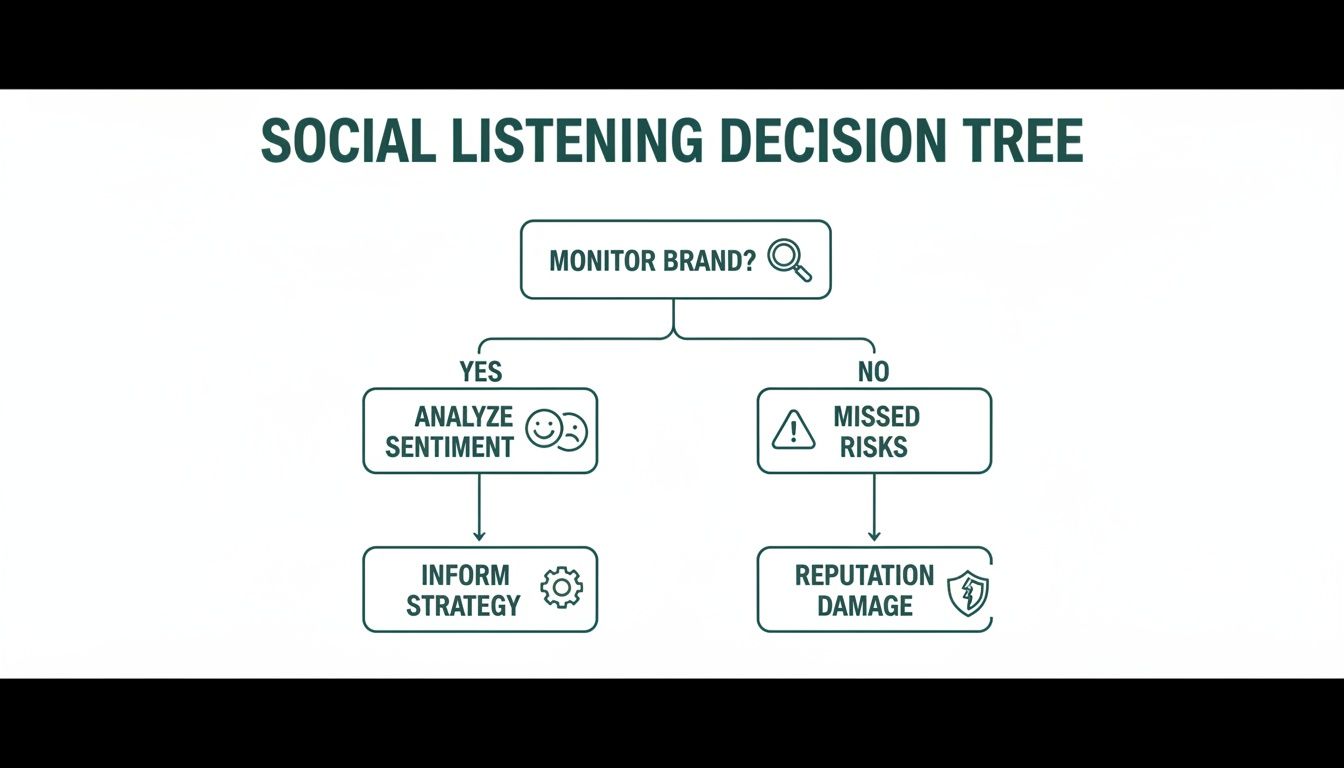
This initial step—monitor, then analyze—is the foundation of any solid response strategy.
Creating a Triage System for Mentions
First things first, you need a triage system. Just like in an emergency room, you have to quickly sort incoming mentions to know what's urgent. This stops your team from wasting time on a minor comment while a five-alarm fire is blazing in your mentions.
Most comments will fall into one of four buckets:
- Positive: These are your brand wins! A customer raving about their experience, loving a product, or giving a team member a shout-out.
- Neutral: This is the simple stuff, like questions about your hours, services, or product features. They aren't emotional, but they still need a fast and accurate answer.
- Negative: These are direct complaints or expressions of frustration. They carry real risk to your reputation and need to be handled with care, and quickly.
- Potential Crisis: This is the big one. A severe negative mention that could go viral, maybe involving safety issues, serious accusations, or a high-profile influencer.
Tagging every mention with one of these labels gives you an instant roadmap. You immediately know where to focus your energy. Remember, a single negative review can convince 94% of potential customers to go somewhere else, so you can't afford to be slow.
Building Your Response Guidelines
Once your categories are set, you can build out specific response protocols for each. This is how you guarantee a consistent brand voice, no matter who on your team is typing the reply. Your guidelines should cover everything from the right tone to key messages and next steps.
For positive mentions, the name of the game is appreciation and amplification.
- Thank the person by name. Get personal.
- Ditch the generic "Thanks!" Instead, mention a specific detail from their comment to show you actually read it.
- Think about asking for permission to share their post as user-generated content (UGC). It’s social proof gold.
For neutral questions, it’s all about speed and accuracy.
- Give a direct, helpful answer as quickly as you can.
- If you have one, link to a relevant FAQ page or resource on your site to provide more detail.
- Keep it friendly and open-ended, inviting them to ask if they need anything else.
For negative comments, your mission is to de-escalate the situation and solve the problem.
- Always start by acknowledging their frustration. Let them know you hear them.
- Offer a sincere apology for the issue without making excuses.
- Move the conversation out of the public eye. Offer to connect via DM, email, or phone to get the details and fix the problem privately.
Responding publicly shows transparency to everyone watching. Resolving the specifics privately protects the customer's personal information and prevents a lengthy back-and-forth. This two-step process is crucial for effective social media reputation management.
Establishing Clear Escalation Paths
So, what happens when a team member gets a question they can't answer? Or a comment that feels like it’s about to explode? An escalation path is your safety net. It’s a simple flowchart that tells your team exactly who to contact and when, preventing panic and costly delays.
Your escalation plan needs to define a few key things:
- Ownership: Assign specific people to monitor certain platforms or types of mentions.
- Thresholds: Spell out what triggers an escalation. For instance, any mention of legal action, safety concerns, or posts from major media outlets should be escalated immediately.
- Contact Points: List the go-to person for different departments. This could be someone on the product team for technical bugs, a manager for high-level complaints, or legal for sensitive issues.
- Information to Include: Make it a rule to provide key details when escalating: a link to the original post, customer history if you have it, and a quick summary of the situation.
This structure empowers your front-line team to handle the day-to-day with confidence, while also making sure the high-stakes issues get expert attention right away. It’s the final piece of the puzzle, turning a reactive process into a controlled, strategic part of your business.
Proactively Building a Positive Reputation
The best defense is a good offense. While you absolutely need a plan for damage control, the real goal of social media reputation management is to build a brand so strong and trusted that it can weather the occasional storm. This is about shifting your focus from just putting out fires to proactively building a positive digital footprint that acts as a powerful buffer.
This proactive work is all about authenticity. It means creating content and nurturing a community that consistently reflects your brand's core values. When you build a loyal audience that feels seen and heard, they become your most powerful advocates—often jumping in to defend you before you even have a chance to respond.

Weave Your Values into Your Content Strategy
Your content is how you tell your brand's story. Instead of a non-stop barrage of sales pitches, your social media calendar should be a thoughtful mix of content that builds real trust and provides genuine value. This is how you stop selling a product and start building a relationship.
Think about organizing your content around pillars that show who you are:
- Customer Success Stories: Don't just tell people your product works; show them. Share detailed case studies or quick video testimonials that put a human face on how your services solve real problems.
- Behind-the-Scenes Glimpses: Pull back the curtain and humanize your brand. Introduce your team, show how a product is made, or share the day-to-day realities of your work. This transparency makes your business far more relatable.
- Educational Content: Position yourself as a go-to expert. Share helpful tips, industry insights, or how-to guides that your audience will actually find useful. This builds authority and a ton of goodwill.
This strategy has a real impact on the bottom line. Brands that nail their follower interactions can see 20-40% higher customer spending, and 71% of consumers are ready to recommend companies that provide great social experiences. On the flip side, be careful—45% of users will unfollow a brand for posting too much irrelevant promotional content.
Harness the Power of User-Generated Content
User-generated content (UGC) is the gold standard of social proof. It's authentic, trustworthy, and way more persuasive than anything you could create in-house. Encouraging and celebrating content from your customers is one of the single most effective ways to build a stellar reputation.
Think about it this way: a local coffee shop could run a simple campaign asking customers to share photos of their "morning moment" with a branded hashtag. They can then reshare the best posts, tagging the creators and making them feel like a valued part of the community. This move generates free, authentic marketing content and fosters a powerful sense of belonging among your audience.
When you celebrate your customers, you turn them from passive followers into active participants in your brand's story. This creates a powerful layer of social proof that insulates your reputation.
Just remember to handle this with a light touch. Always ask for permission before resharing content and be sure to give proper credit. The goal is to make your customers the heroes of the story, which reinforces all the positive experiences people have with your brand. For a deeper dive into creating compelling visuals, check out this guide on how to film a high-quality marketing video for social media.
Master the Art of Community Engagement
Proactive reputation management is more than just posting content—it’s about getting in on the conversation. Consistent community engagement is what turns a static social media page into a lively hub for your audience. You have to be present, responsive, and genuinely interested in what your followers have to say.
Simple, consistent actions can make a huge difference:
- Ask Open-Ended Questions: Don't just broadcast information. Spark discussions by asking for opinions, feedback, or even fun, lighthearted questions that get people talking.
- Respond to Positive Comments: Don't just "like" positive feedback. Take a moment to write a personalized thank you. Acknowledging praise shows you're listening and that you appreciate their support.
- Celebrate Your Audience: Make it a regular practice to feature or give a shout-out to loyal followers, customers, or partners. This small act of recognition can build immense goodwill and lasting loyalty.
By consistently showing up and engaging, you create a digital space where people feel valued. That positive atmosphere becomes your brand’s greatest asset, building a loyal community that will stand by you.
Navigating Online Reviews and Crisis Situations
While having a solid content strategy is great, the real test of your reputation management chops comes when things get messy. Let's be honest, two scenarios give every business owner a jolt of anxiety: a sudden wave of negative reviews or a full-blown crisis. How you handle these moments—with speed, transparency, and a bit of grace—is what separates the pros from the amateurs.
This is exactly why having a playbook is non-negotiable. Without a clear plan, it’s easy to panic. Responses get delayed, and what started as a small fire can quickly blaze into a reputation-damaging catastrophe.
Mastering Your Response to Online Reviews
Think about it: reviews on sites like Google, Yelp, and other industry-specific platforms are often the very first thing a potential customer sees. Getting this right comes down to two things: actively encouraging the good reviews and professionally handling the bad ones.
First up, you need a system for getting a steady stream of positive feedback. Your happiest customers are usually the quietest, so you have to give them a gentle nudge.
- Make it incredibly easy. Drop direct links to your review profiles in your email signature, print them on receipts, or use a simple QR code at your checkout counter.
- Strike while the iron is hot. The best time to ask is right after a positive interaction—the moment a project is successfully wrapped up or a customer pays you a compliment in person.
- Don't pay for praise. Offering rewards for good reviews violates the terms of service on most platforms and just feels inauthentic. You can, however, offer a small incentive for simply leaving honest feedback, regardless of the sentiment.
Now, let's talk about the tough stuff: negative reviews. Seeing a one-star rating can feel like a punch to the gut, but a calm, strategic response can actually win you major points with everyone watching.
A thoughtful public reply to a negative review isn't just for the unhappy customer. It’s a performance for every single potential customer who is watching how you handle criticism.
When a bad review pops up, keep it simple. Acknowledge their specific complaint, apologize that their experience fell short, and immediately offer to take the conversation offline to make things right. This simple formula shows you're accountable without dragging you into a messy public argument.
Building a Simplified Crisis Communication Plan
A true crisis isn't just a bad review; it’s a major event that threatens your brand's integrity. We’re talking about a product safety recall, a serious employee mistake, or a data breach. As a small business, you don't need a hundred-page corporate binder, but you absolutely need a basic framework.
By 2026, social media has become the main arena for brand reputation, and a single misstep can have a massive financial impact. These crises spread like wildfire—a staggering 1200% faster than through traditional news. With 80% of executives admitting social crises damage reputation and loyalty, and knowing a solid plan can cut losses by up to 30%, it's clear: reputation management is your most critical line of defense. You can learn more about how reputation management is your first line of defense from Refontelearning.com.
Your plan really just needs to cover three core bases.
Identify Your Crisis Response Team
This doesn't have to be a big committee. For most small businesses, it’s probably the owner, a marketing person, and maybe someone from operations. The key is that everyone knows exactly what they're supposed to do when things go sideways.
- The Decision-Maker: This is the person with the final say on any public statement. No back-and-forth.
- The Communicator: This person is in charge of drafting and posting all official communications.
- The Fact-Finder: This person's only job is to get the real story—fast. They gather all the information about what actually happened.
Prepare Holding Statements
When a crisis first breaks, you won’t have all the answers. That’s okay. A "holding statement" is a pre-approved message you can post immediately to show you're on top of it while you figure things out.
Keep it simple and empathetic. Something like: "We are aware of the situation regarding [the event] and are taking it very seriously. We are currently investigating and will share more information as soon as we have it. We're committed to resolving this for everyone affected." This buys you precious time and helps stop rumors before they start.
Establish a Single Source of Truth
In the middle of chaos, you need to control the flow of information. Pick one social media channel—just one—to be the official source for all updates. Then, direct everyone there: customers, the media, even your own employees.
This simple step prevents conflicting messages from popping up across different platforms, which only creates more confusion. By becoming the definitive source, you maintain credibility and can guide the conversation, turning a chaotic situation into a manageable one.
Common Questions About Social Media Reputation Management
Jumping into social media reputation management can feel like a lot, especially when you're a small or mid-sized business trying to get the most bang for your buck. I get asked these questions all the time, so let's break them down with some straightforward, real-world answers.
How Can a Small Business Manage Its Reputation with Limited Resources?
The key here is to work smarter, not harder. It’s tempting to think you need to be on every single platform, but that’s a quick path to burnout. Instead, figure out where your customers actually hang out. For most small businesses, that’s just one or two key platforms.
You don't need a fancy, expensive software suite right out of the gate. Start with free tools like Google Alerts and just use the built-in notifications on your chosen social channels. Whip up a simple document with a handful of pre-written (but customizable!) responses for the usual questions and feedback. The real trick is consistency—carve out just 20-30 minutes a day to check in and respond. That daily habit is far more powerful than sporadic, all-day monitoring sessions.
If you only have time for one thing, make it this: Respond to negative comments quickly and publicly. This single action shows everyone watching that you're listening and you care, which builds a ton of trust.
Should I Delete Negative Comments on My Social Media Pages?
My short answer? Almost never. Hitting that delete button is like pouring fuel on a fire. It makes you look like you're hiding something or censoring people, which can turn a minor gripe into a major PR headache.
A much better approach is to respond publicly and professionally. Acknowledge the person’s frustration and offer to take the conversation offline to fix it. This shows accountability to every single person who sees that post. The only time you should ever delete a comment is when it clearly violates the platform’s rules—we're talking spam, hate speech, doxxing, or truly vile, abusive stuff. In those cases, don't even engage. Just delete and block.
How Long Does It Take to Repair a Damaged Online Reputation?
This is the million-dollar question, and unfortunately, there's no simple answer. The recovery time really depends on two things: how big the mistake was and how committed you are to fixing it. A small blunder, like an off-key tweet, can often be cleared up within a few days with a quick and sincere apology.
But a major crisis? Think a serious product defect or a widespread service outage. That can take months, sometimes even years, of dedicated work to rebuild that broken trust. Your first step is always to fix the root problem. After that, it's about consistently creating positive experiences and content—sharing customer stories, highlighting community work, and promoting good news—to slowly but surely change the conversation and push the negative stuff down.
What Are the Most Important Reputation Metrics to Track?
Likes and follower counts are nice for the ego, but they don't tell you much about your actual reputation. To get a real sense of your brand's health online, you need to track the metrics that show you what people truly think and feel.
I recommend focusing your dashboard on these four:
- Sentiment Analysis: What’s the balance of positive versus negative mentions? This is your gut check on public perception.
- Response Time: How fast are you getting back to people, especially when they're upset? A quick response can stop a small problem from blowing up.
- Share of Voice: In the broader conversation about your industry, how much of it is about you versus your competitors?
- Review Ratings: Keep a close eye on your average star rating on critical sites like Google, Yelp, or industry-specific review platforms. This is often a potential customer's first impression.
These numbers give you a clear, actionable story about whether your reputation management efforts are actually working.
At Danny Avila, we specialize in helping brands build and defend their online reputation by weaving together smart content, SEO, and genuine social media engagement. If you're ready to build a brand that people truly trust, let's start a conversation.