followers don't pay the bills: social that gets customers
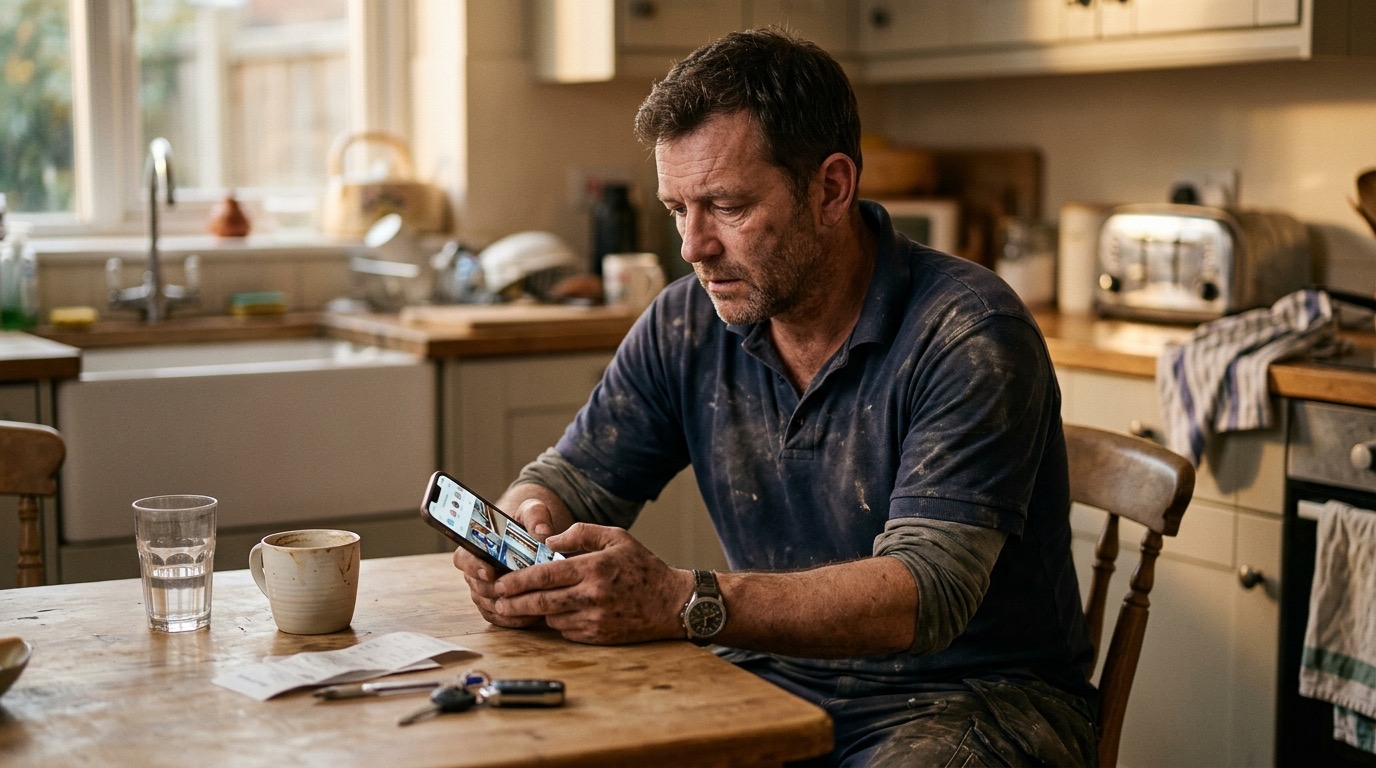
I talked to a painting contractor last year who had built up a few thousand Instagram followers over about eighteen months. Posted consistently. Good photos of finished work. Decent engagement. He was proud of it, and honestly, it looked good.
He was also slower than he’d been in two years. The followers weren’t turning into jobs.
This is the followers vs customers social media problem in one story. And it catches a lot of local service business owners off guard because growing a following feels like progress. It looks like marketing. But for a contractor, a plumber, an HVAC tech, or anyone whose business lives and dies by local jobs, reach without revenue is just a hobby with a business card attached.
why follower count is the wrong thing to optimize for
The platforms want you chasing followers. More followers means more time on their app, which means more ad revenue for them. The metric is built to serve them, not you.
For a national brand selling products online, reach matters. You’re fishing in a huge pond and some fraction of your audience will eventually buy. But if you’re a roofer in Escondido, most of your Instagram followers live in cities you’ll never work in. Someone in Dallas who liked your time-lapse video of a reroof is never calling you.
The math only works when the followers are local and they’re actually looking for what you do.
Two hundred people in North County San Diego who’ve seen your work, read a review you shared, and watched a short clip of you explaining how to spot a failing roof seal are worth more than twenty thousand followers who happened to enjoy a reel. One group might call you. The other group is just a number.
what followers vs customers social media really looks like in practice
Here’s what the wrong version looks like. You post your best work, mix in some trending audio, grow your following, and check the likes. That’s it. No link to book. No mention of your service area. No indication of how someone hires you. The goal was the number, not the call.
Here’s what the right version looks like. You post a before-and-after of a fence replacement in Vista. In the caption you say you’re taking on fence jobs in Vista and San Marcos through the end of the month. You add a link to your contact page. You respond to every comment. Someone who lives three blocks from that job sees it, remembers it two weeks later when their fence panel blows down, and searches you out.
That’s a customer. Not a follower.
The difference isn’t effort. It’s direction.
the four things that turn social reach into revenue for local businesses
1. you have to tell people what to do
This is the one most people skip. You post a photo and leave it at that.
Every post that’s meant to drive business needs a next step. Not a hard sales pitch. Just a clear, natural direction. “We have a couple of open spots this month if you’re in Oceanside.” “DM me if you want a free estimate.” “Link in bio to book a call.”
People don’t follow invisible bread crumbs. If you want them to call, make it easy to call.
2. local targeting matters more than reach
If you’re running any paid social, the setting that matters most is location. Set it tight. Your city, the neighboring cities you actually work in, a radius around your shop. You’d rather reach a thousand people in a ten-mile radius than fifty thousand people scattered across the country.
Same logic applies to organic content. Mention your service area in captions. Tag your location when you post. Use local landmarks or neighborhoods as context when it fits naturally. This tells the algorithm where you are and helps it show your content to people nearby.
3. proof converts better than polish
The cleanest graphic in the world doesn’t close jobs. What closes jobs is proof that you’re good and that real people trust you.
That means photos from real projects, not stock images. It means posting a screenshot of a five-star review with a line about what the job was. It means occasionally filming a quick thirty-second clip of yourself on a job site, because seeing a real person does more for trust than any designed post.
For a local service business, proof is your greatest marketing asset and it costs you nothing but a few seconds to capture it.
4. send people somewhere they can actually take action
Social media is where they find you. Your website, your Google Business Profile, and your phone number are where they hire you.
If someone is ready to call and they click your Instagram link and land on a homepage that’s confusing or doesn’t have a phone number in plain sight, you’ve lost them. The moment someone is ready is the moment that matters. Make that handoff clean.
A link to your social media services page or a booking page is worth more than a beautifully curated grid.
the mindset shift that changes everything
Most local businesses that are good at social media aren’t posting more. They’re posting with a clearer purpose.
Instead of asking “what should I post today,” ask “who is this for and what do I want them to do after seeing it?” That reframe turns a random content calendar into something that actually builds business.
You don’t need ten thousand followers. You need the right hundred people to see the right thing at the right time and know exactly how to reach you.
That’s a different game. And it’s one a local service business can actually win.
common questions
does posting more often get me more customers?
Volume alone doesn’t drive customers. A contractor who posts three times a week with a clear service area, a call to action, and real proof of their work will get more calls than someone posting twice a day with no direction. Consistency matters, but consistency in the right things, not just frequency.
should I be on every platform?
No. Pick one or two based on where your customers actually spend time. For most trades and home services, Facebook reaches the homeowner demographic that hires contractors. Instagram works well if you do work with strong visual results. You don’t need TikTok unless you have bandwidth for it and your customers are there. Starting focused and doing it well beats being spread thin across five platforms.
what if I have zero following right now?
Start with your existing customers. Ask them to follow your page. Post about work in your service area with location context. Run a small geo-targeted ad for twenty to thirty dollars to get your content in front of local homeowners. You don’t need to build an audience from scratch organically. You need to be in front of the right people, and paid reach on social can get you there fast for a fraction of what traditional advertising costs.