7 signs your website is costing you jobs
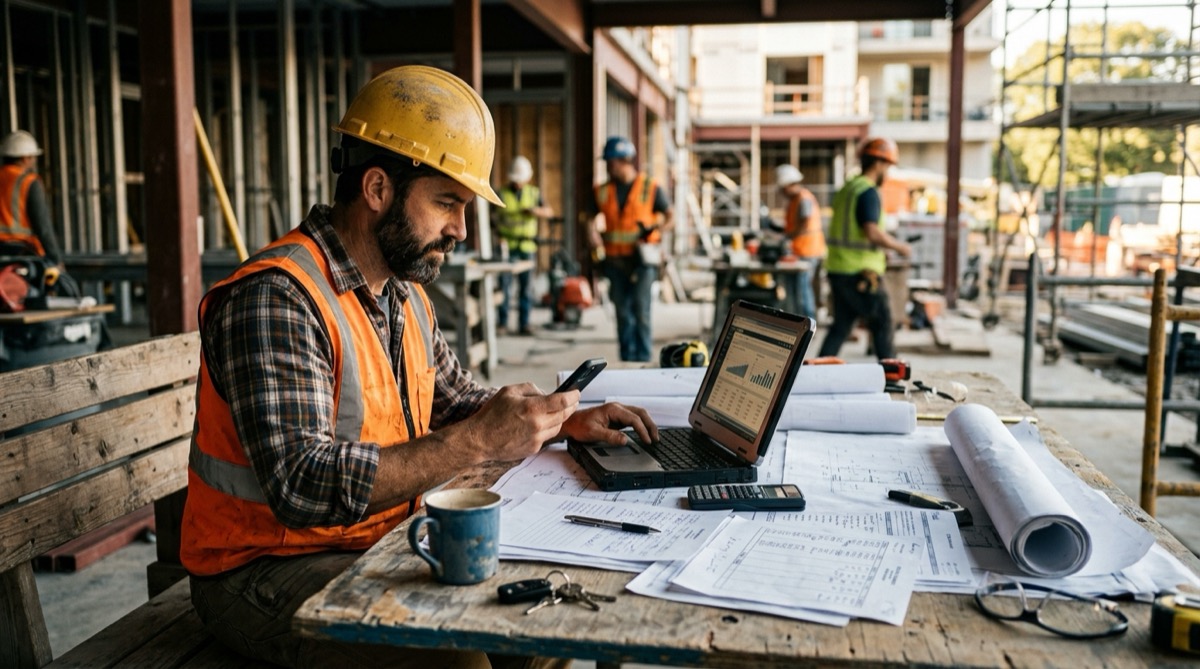
A plumber I worked with had a solid reputation. Good reviews, plenty of referrals, fair pricing. Then I pulled up his website on my phone and understood exactly why his call volume had plateaued. The site took eleven seconds to load. On mobile, the phone number was buried. The homepage led with a paragraph about the company’s history.
He wasn’t losing jobs because of his work. He was losing them before anyone picked up the phone.
That’s the version of “signs your website needs a redesign” nobody writes: it’s not about aesthetics. It’s about whether your site is working for you or quietly working against you.
Here are seven things to look for.
1. it loads slowly on a phone
Pull your site up on your phone right now on regular cell service, not your home Wi-Fi. Count the seconds.
If it takes more than three seconds to show something useful, a real percentage of people are gone before they see your name. On mobile, people don’t wait. They hit the back button and call whoever loaded first.
Speed is not a design question. It’s a revenue question.
2. it doesn’t look right on a phone
This is different from speed. A site can load fast and still be nearly impossible to use on mobile because it was built for a desktop browser and never updated.
Small text that requires pinching. Buttons too close together to tap. Forms that go sideways. Phone numbers that don’t click-to-call.
More than half of your traffic is probably coming from mobile right now. If the experience there is broken, you’re losing jobs to whoever has a site that isn’t.
3. you never get calls or form submissions from it
This one takes some honesty. When’s the last time a stranger found your site and reached out?
If the answer is “I can’t remember” or “my business runs on referrals,” your site may not be broken in an obvious way. It might just have no clear next step. No easy way to contact you. No reason to act.
A site that doesn’t generate any leads isn’t a brochure. It’s a dead end. And every month it sits that way is another month of jobs going to someone else who showed up in the search results with a site that actually asked for the call.
4. you’re embarrassed to share it
This one’s the gut check.
When someone asks for your website, do you send it without thinking? Or do you hesitate and add a disclaimer: “It’s a little outdated, we’re working on a new one”?
If you wouldn’t hand it to a new customer with confidence, you already know the answer. The site isn’t doing its job, which is to make you look like the obvious choice.
5. it takes a developer to change anything
Adding a new service shouldn’t require an email chain and a $200 invoice. Updating your hours or swapping a phone number should take five minutes, not five days.
If your site is so locked down that you can’t touch it yourself, it’s not going to stay current. And a site that isn’t current starts signaling to visitors, and to Google, that maybe you’re not current either.
This is one of the first things I look at when I start working on a business’s web presence. If the owner can’t update the site, the site won’t get updated. Simple as that.
6. there’s no obvious next step
Land on your homepage. What does it tell someone to do?
If the answer is “read more about us” or “scroll through our gallery,” that’s a problem. People land on a site with a question: can this company help me? Your site’s job is to answer that question and make it easy to take the next step. Call this number. Fill out this form. Get a quote.
If someone has to hunt for how to contact you, most of them won’t.
7. it doesn’t reflect what you actually do anymore
Businesses change. You dropped a service. You added one. You moved. You raised your prices and moved upmarket. But the website still says what you were doing four years ago.
That mismatch creates friction. The wrong customers call. The right customers aren’t sure you can help them. And the whole thing starts to feel like something you inherited instead of something you own.
A site should match where the business is right now, not where it was when someone first built it.
None of this is about having the fanciest design or the biggest budget. It’s about whether your site is a bottleneck or an asset.
For most local service businesses, the site is a bottleneck. It’s slow, it’s stale, and it’s not asking for business. The fix doesn’t have to be dramatic. Sometimes it’s a rebuild. Sometimes it’s three targeted changes that move the needle immediately.
common questions
how do i know if my site is actually slow?
Go to pagespeed.web.dev and run your URL. Google will give you a score and flag the specific issues dragging load time down. A score under 50 on mobile is worth fixing.
do i need a full redesign or can i just make updates?
Depends on the foundation. If the site is built on something modern and flexible, targeted updates can go a long way. If it’s on an outdated platform, or if the structure itself doesn’t make sense for how customers actually use it, a rebuild is usually faster than trying to fix around a bad foundation.
how much does a redesign cost for a small business?
Ranges vary a lot based on scope, platform, and who’s doing the work. A serious site built by someone who knows what they’re doing typically falls somewhere between two and eight thousand dollars. If you’re getting quotes under a thousand, ask what’s actually included.
If you’re looking at this list and checking more than two or three boxes, your site is probably costing you jobs. I can take a look and give you an honest read on what’s worth fixing and what isn’t. Sometimes the answer is a full rebuild. Sometimes it’s a few changes. Sometimes the answer is no, and that’s worth knowing too.