how to get more google reviews without breaking the rules
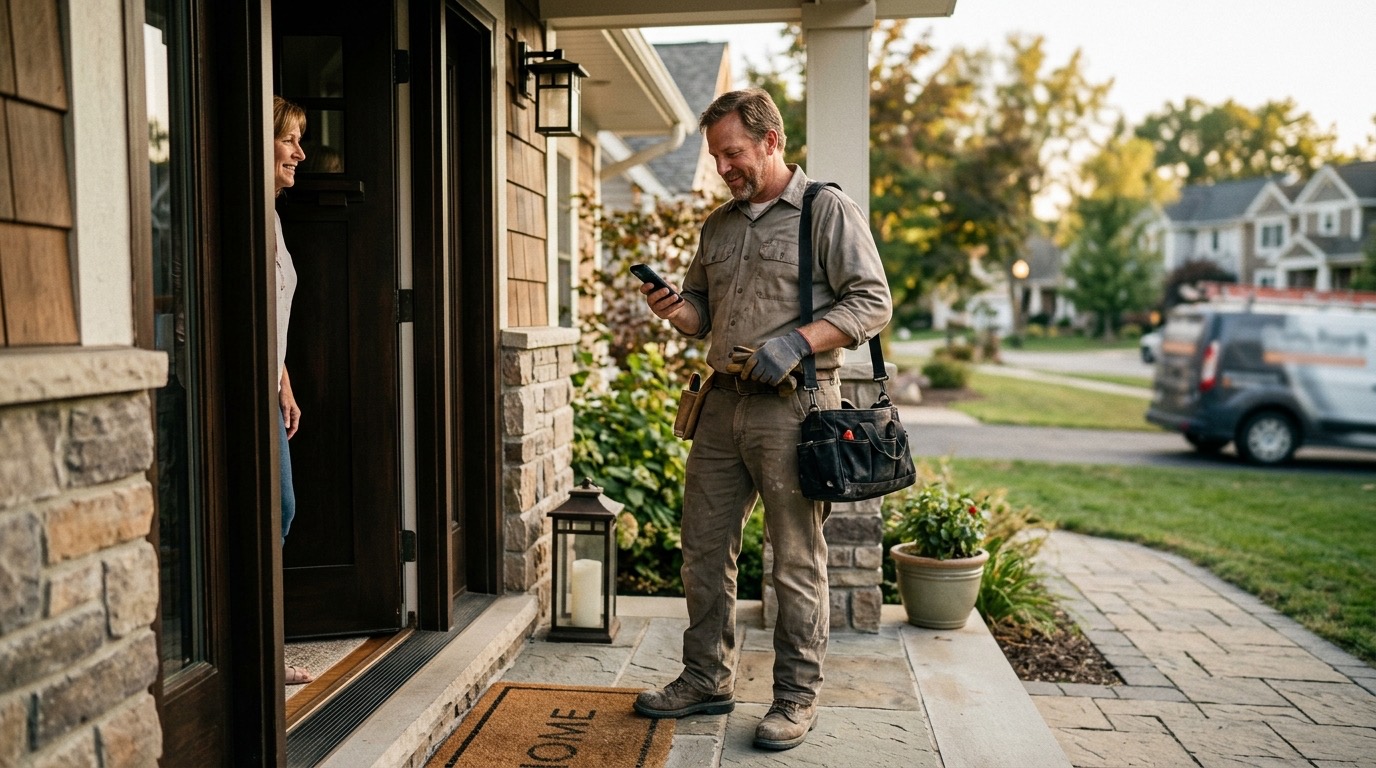
A plumber I know has been in business for eleven years. Good reviews on Yelp from years ago. Almost nothing on Google. His competitor down the street, in business for four years, has 140 Google reviews and consistently shows up in the map pack when someone in their city searches for a plumber.
My guy is better at the job. He just never built the habit.
If you want to know how to get more Google reviews, the answer isn’t a secret. It’s a system you build once and then let run. Here’s what that looks like.
why google reviews matter more than other reviews
Google is where most local searches happen, and the map pack (those three businesses that show up with a map above the regular results) is heavily influenced by reviews. Not just how many you have, but how recently you got them and what your average rating looks like.
When someone in your city searches for your service on their phone, that map pack is often the first thing they see. Reviews are the difference between you looking credible and you looking invisible. They’re also trust signals for anyone who does find your website. People read them before they call.
The other thing reviews do: they carry real content. Customers mention your city, your service type, specific details. That language reinforces what you do and where you do it in a way that helps Google understand your business better.
the right moment to ask
The single biggest mistake business owners make is asking too late, or not at all.
The best time to ask for a review is right after the job is done and the customer is happy. Not a week later in an email they’ll ignore. Not in a generic follow-up sequence that goes out to everyone regardless of how the job went. Right there, when they said “this looks great” or “you guys were fast” or “I’ll definitely call you again.”
That moment is when it’s easiest for them. The experience is fresh. The goodwill is at its peak. You haven’t given them time to forget or get distracted.
A simple version of this looks like: your tech finishes the job, asks “any questions about what we did today?”, gets a thumbs up, and then says “we’d really appreciate it if you left us a Google review. I can text you the link right now so it’s easy.” Most people say yes in that moment if you make it that simple.
make it one tap, not a chore
Here’s where a lot of businesses lose the review before it ever gets written. They ask at the right moment, but then expect the customer to go home, open a browser, search for the business, find the Google listing, click reviews, and leave one. That’s too many steps. Most people don’t do it.
You need a direct link that opens Google’s review form immediately. Google gives you one through your Business Profile dashboard. Copy it. That’s the link you text, email, and put on a QR code.
A QR code is particularly useful for service businesses. Print it on your invoice, your business card, a small thank-you card you leave at the job. Customer scans it, reviews open, they type a sentence and hit submit. That’s it.
The easier you make it, the more reviews you get. This is not a complicated insight, but most businesses haven’t done it yet.
automate the follow-up without being annoying
Not everyone will review you on the spot, even if they want to. They get home, kids need dinner, they forget.
A short follow-up text the next day does a lot of work here. Something like: “Hey, this is [name] from [company]. Thanks again for letting us take care of [service] yesterday. If you have two minutes, a Google review means a lot to us.” With the link.
One follow-up. Not three. One.
You can set this up with tools most service businesses already have access to, whether that’s a CRM, a scheduling tool, or even a simple automation through something like Jobber, Housecall Pro, or Google’s own Business Messages. The goal is that the link goes out without you having to remember to send it each time.
what you cannot do (and why it matters)
Google’s policy on reviews is clear. You cannot offer incentives. Not a discount, not a gift card, not entry in a drawing. If it looks like you’re paying people for reviews, Google can remove them or penalize your listing.
You also can’t ask only satisfied customers. The correct approach is asking all customers the same way with the same link. Review gating (sending people to a satisfaction survey first and only forwarding the happy ones to Google) violates policy.
Beyond the policy, it’s also just not a good strategy. Artificial review inflation doesn’t last. And one business owner getting caught doing it publicly does more reputational damage than a 3.8 star average would.
Just ask everyone. Your average will reflect reality, and that’s fine. A business with 80 reviews at 4.6 stars is almost always going to beat a competitor with 12 reviews at 5.0 stars.
respond to every review, including the bad ones
This is where a lot of business owners stop paying attention, and it’s a mistake.
Responding to reviews tells Google your listing is active. It tells customers who are reading the reviews that you’re a business who cares. And when you respond to a negative review calmly and professionally, it actually builds more trust than if the negative review just sat there ignored.
You don’t need to write essays. A few sentences thanking someone for a positive review is enough. For a negative one, acknowledge what they said, offer to make it right if there’s a way to, and keep the tone even. Don’t argue. Don’t get defensive. People reading that exchange will notice how you handled it.
This takes ten minutes a week if you check once or twice. If you’re getting a high volume of reviews, you can set up a notification so you see them as they come in.
how to get more google reviews as a system, not a sprint
The businesses with the most reviews didn’t do one big push. They built a small repeatable habit:
Ask at the right moment. Send the direct link. One follow-up text the next day. Respond when reviews come in.
Do that for every customer and your review count will climb steadily. Thirty reviews becomes sixty becomes a hundred, and at that point you’re not competing with most of the businesses in your area because they gave up on this a long time ago.
The reviews also support your overall local SEO work. They’re not separate from ranking. They’re part of it.
If you’re starting from zero, the goal for the first month is simple. Get five reviews. Ask five customers this week, make it easy, follow up once. That’s it. Build the habit before you build the system.
common questions
can i ask customers for google reviews?
Yes, absolutely. Asking customers to leave a review is allowed under Google’s policy. What’s not allowed is offering incentives in exchange for reviews, or only asking customers you think will leave positive feedback. Ask everyone the same way.
how many google reviews do i need to rank in the map pack?
There’s no magic number, and it varies by market and how competitive your service area is. In most mid-size cities, being in the top three for a local service term usually requires at least 30 to 50 reviews with a strong average rating. Some less competitive markets are easier. The point is: consistent, ongoing review generation matters more than hitting a specific count.
what do i do if i get a fake or unfair negative review?
If it’s clearly fake, report it through your Google Business Profile dashboard. Google doesn’t always remove them quickly, but the process exists. If it’s a real customer with a real complaint, respond professionally and offer to resolve it. Responding well to a bad review often matters more to future customers than the review itself.