how to rank higher on google maps without gaming it
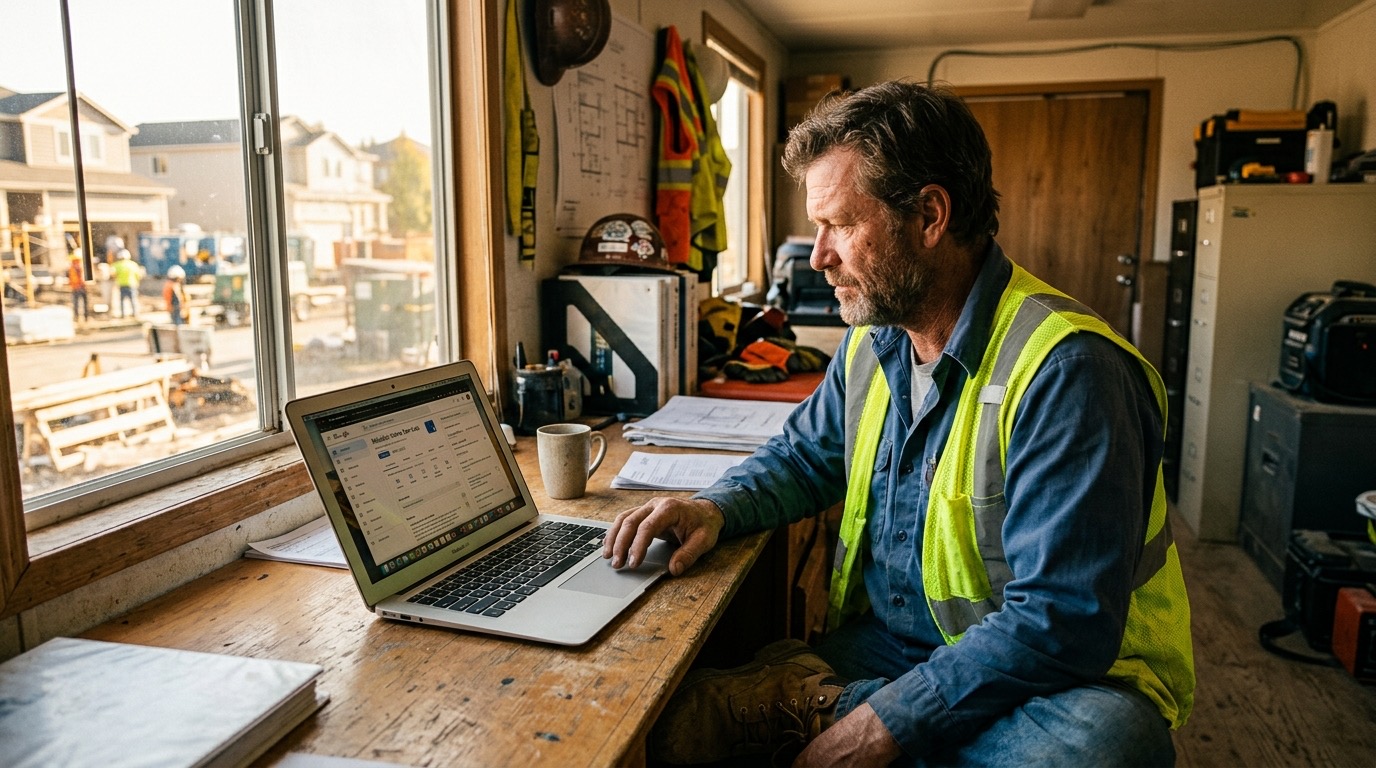
A landscaping company I know had a solid business. Good work, reliable crew, decent word-of-mouth. But when someone in their own city searched for landscapers on Google Maps, they didn’t show up. Not on the first page. Not even close.
They’d been told they needed to “do SEO,” but nobody had explained what that actually meant for Maps specifically. So they did nothing, and their competitors kept getting the calls.
If you want to rank higher on Google Maps, you don’t need tricks. You need to understand how Google decides who shows up, and then do the unglamorous work of giving it what it’s looking for.
how google maps ranking actually works
Google is pretty transparent about this. They rank local businesses on three things: relevance, distance, and prominence.
Relevance is whether your profile matches what someone searched for. Distance is how close you are to the person searching. Prominence is how trusted and established your business looks online.
You can’t move your office. Distance is what it is. But relevance and prominence? Those you can build.
The businesses that show up at the top of the local map pack aren’t there because they paid for a spot or found some loophole. They’re there because Google trusts them more than the alternatives. Your job is to earn that trust in ways Google can actually measure.
start with your google business profile
This is the foundation. If your Google Business Profile is incomplete, outdated, or inaccurate, nothing else you do matters as much as fixing that first.
Fill out every field. Business name, address, phone, website, hours, service area, business description, all of it. Not because filling out fields is magic, but because Google uses that information to understand what you do and who to show you to.
Your primary category is the most important single field in the entire profile. It tells Google what type of business you are, which determines which searches you’re even eligible to appear in. Pick the most accurate one. If you’re a general contractor who mainly does kitchen remodels, pick that. Don’t try to be everything, it dilutes your relevance.
Add your services individually. If you do roof repair, gutter cleaning, and attic insulation, list all three. Google uses those service listings to match you to specific searches.
Keep your hours accurate. This sounds trivial, but Google factors in whether your business is open when someone is searching. An outdated listing costs you clicks.
reviews are doing more than you think
Reviews are probably the highest-impact thing you can work on, and most local businesses are leaving this completely to chance.
The quantity matters. So does the recency. A business with forty reviews from two years ago is less compelling to Google, and to real people, than a business with twenty-five reviews from the last six months. Fresh reviews signal that the business is still active and still delivering.
Quality matters too. A detailed review that mentions what you did, where you did it, and how the experience went is more useful to Google than a five-star review with no text. It gives Google more context about your relevance for specific searches.
Ask for reviews. Not in a weird scripted way. Just as part of finishing a job. “Hey, if you’re happy with the work, a Google review goes a long way for us.” Most customers who had a good experience are willing to leave one if you make it easy. Text them a direct link to your review page.
Don’t buy reviews. It’s against Google’s terms of service and it’s not worth it. Google is getting better at detecting patterns that look fake, and the penalty for getting caught is your listing getting suspended. That’s worse than starting from zero.
photos, more than you’d expect
Google has confirmed that businesses with photos get more clicks and more direction requests than those without.
Post new photos regularly. Weekly is a good cadence if you can manage it. Finished jobs, your crew working, before-and-after shots. Real photos of real work, not stock images.
Photos serve two purposes. They signal to Google that your profile is active and maintained. And they signal to potential customers that you’re a real, operating business doing real work. Someone who can see photos of a kitchen you remodeled in their neighborhood is more likely to call than someone who just sees a logo.
Tag your location when you upload photos if you can. Some tools let you embed GPS coordinates in image metadata, which gives Google more geographic context about where you work.
nap consistency across the web
NAP stands for name, address, phone number. The consistency of this information across every place it appears online, your website, Yelp, Angi, the Chamber of Commerce, Facebook, anywhere, affects how much Google trusts your business data.
If your address is listed slightly differently in different places (Suite 100 vs. Ste. 100, or a missing zip code), that’s not catastrophic on its own. But inconsistencies across dozens of listings add up. Google becomes less confident about where you actually are and what you actually do.
Do a quick audit. Search your business name on Google and see what comes up. Check the top directories. Fix anything that’s wrong or outdated. This is boring work but it pays off.
local links and mentions
This is where local SEO gets into slightly longer-term territory, but it’s worth understanding.
Prominence, Google’s third ranking factor, is partly built by how many other websites reference your business. Links from local news sites, neighborhood blogs, industry associations, or even a local Chamber of Commerce listing send signals that your business is real and established in your area.
You don’t need a hundred of these. A handful of credible local mentions carries real weight. Sponsor a local event. Get featured in a neighborhood newsletter. Join your city’s business association. These aren’t shortcuts, they’re just how real local businesses get known.
the stuff that doesn’t work
Keyword stuffing your business name. Google’s guidelines say your business name should be your actual business name, not “San Diego Plumber Best Reviews Fast.” Violating this can get your listing suspended.
Buying reviews or creating fake ones. Already covered, but worth repeating: not worth it.
Creating listings at addresses where you don’t actually operate. This is called a virtual office scheme and Google has gotten much better at catching it.
Posting and ignoring. A Google Business Profile that hasn’t been touched in six months sends a signal that the business might not be active. Stay current.
what this looks like in practice
For most local service businesses, the realistic path looks something like this.
Spend a few hours getting your Google Business Profile completely filled out and accurate. Make sure your NAP matches your website exactly. Set a weekly reminder to upload a few job photos. After every completed job, ask the customer for a Google review.
Do that consistently for three to four months and you will see movement. Not necessarily the top spot for every search, but movement. You’ll show up more often, in more places, for more relevant searches.
This isn’t fast. But it’s also not complicated. The businesses that dominate local Maps aren’t doing something you can’t do. They’re just doing the basics more consistently than everyone else.
common questions
how long does it take to see results from google maps optimization?
It depends on how competitive your market is and how much work your profile needs. In less competitive markets, you can see meaningful movement in four to eight weeks just from completing your profile and getting a few fresh reviews. In tighter markets, expect three to six months of consistent effort before you’re ranking regularly in the top three.
do i need a website to rank on google maps?
No, but it helps. You can rank in the local map pack with only a Google Business Profile. That said, having a website that’s optimized for local terms adds credibility and gives Google more information to work with. It also gives people somewhere to go if they want to learn more before they call.
what’s the difference between google maps rankings and regular google search rankings?
Maps rankings (the local pack) are driven primarily by your Google Business Profile, your reviews, and your local prominence. Regular search rankings (the blue links) are driven by your website’s content, authority, and technical SEO. They’re related but separate systems. A business can rank well in Maps without having a strong website, and vice versa. Ideally, you’re building both.
If you want a straight read on where your Google Maps presence stands and what’s actually worth fixing, I’m happy to take a look. Sometimes the answer is simple. Sometimes the answer is no. Either way, it’s worth knowing.