product photography that sells without an agency budget
A client of mine was about to spend $800 on a product photo shoot for six items. One of those items had sold twice in eight months. Before we scheduled anything, I asked her to pull up her product page and tell me what questions a first-time buyer would have just from looking at the photos she already had.
She listed five questions in about forty-five seconds. None of them were answered by what was there.
That’s the actual problem with most product photography for small business. Not the budget. Not the equipment. The photos aren’t doing any selling. They’re just showing up.
what good product photos actually do
There’s a version of this conversation that starts with aperture settings and ring lights and white balance. I’m going to skip that, because most small business owners don’t need a photography education. They need photos that close sales.
Good product photos do three things.
They reduce doubt. When someone can’t hold your product, touch it, or ask you a question in real time, the photo is the whole sales conversation. A sharp photo of the label, the texture, the size relative to something familiar. That’s what turns a browser into a buyer.
They set accurate expectations. Returns happen when the product shows up and it’s not what the customer pictured. A photo that shows true color in good light, the actual dimensions, the seam on the back, the weight of the material. That’s not over-explaining. That’s just honest, and it saves you a $12 return label and an unhappy review.
They signal that someone takes this seriously. You don’t need studio lighting to look professional. You need to look like you thought about it. A clean background, consistent framing, photos that match each other across your catalog. That consistency says more than one perfect hero shot surrounded by chaos.
product photography for small business: what you can do yourself
Most people have what they need to shoot decent product photos right now.
A window that gets good light for a few hours during the day. A piece of poster board or a foam core sheet in white or light gray. A phone camera from the last three years. That’s the baseline. It’s enough for a lot of products.
The window is your best tool. Shoot with the light coming from the side, not behind you and not behind the product. Side light creates soft shadows that show shape and texture. Overhead or flat-on lighting flattens everything out and makes products look cheaper than they are.
Get the product off the ground. A table pushed close to the window, nothing in the background. If you can get a foam core sheet propped up behind the product and one laid flat under it, you’ve got a cheap infinity curve that eliminates the line where the wall meets the floor. That’s what most simple product shots are built on.
Shoot more angles than you think you need. Front, back, side, top-down, close-up on the detail that makes your product different. If there’s a label, show it straight on so it’s readable. If there’s a texture, get close enough that you can feel it through the screen. If size matters, put something familiar next to it.
Edit consistently. You don’t need Photoshop. Lightroom Mobile is free. Brighten it the same amount every time. Crop to the same ratio every time. The goal is that when someone looks at your shop or your website or your catalog, every photo feels like it came from the same place, the same session, the same standard. That consistency is what looks professional. Not any single photo being perfect.
when it makes sense to hire out
DIY works until it doesn’t.
Reflective products are a real problem. Jewelry, glassware, anything with a chrome finish, polished wood. These take time to shoot well because the reflections show everything in the room. If you’ve spent two hours fighting reflections on a candle holder and still can’t get a usable shot, that’s not a skill gap, that’s a category that needs a controlled environment.
Small products are similar. If your product is smaller than a golf ball and the detail matters, getting a phone camera to focus correctly and consistently is genuinely hard without additional gear.
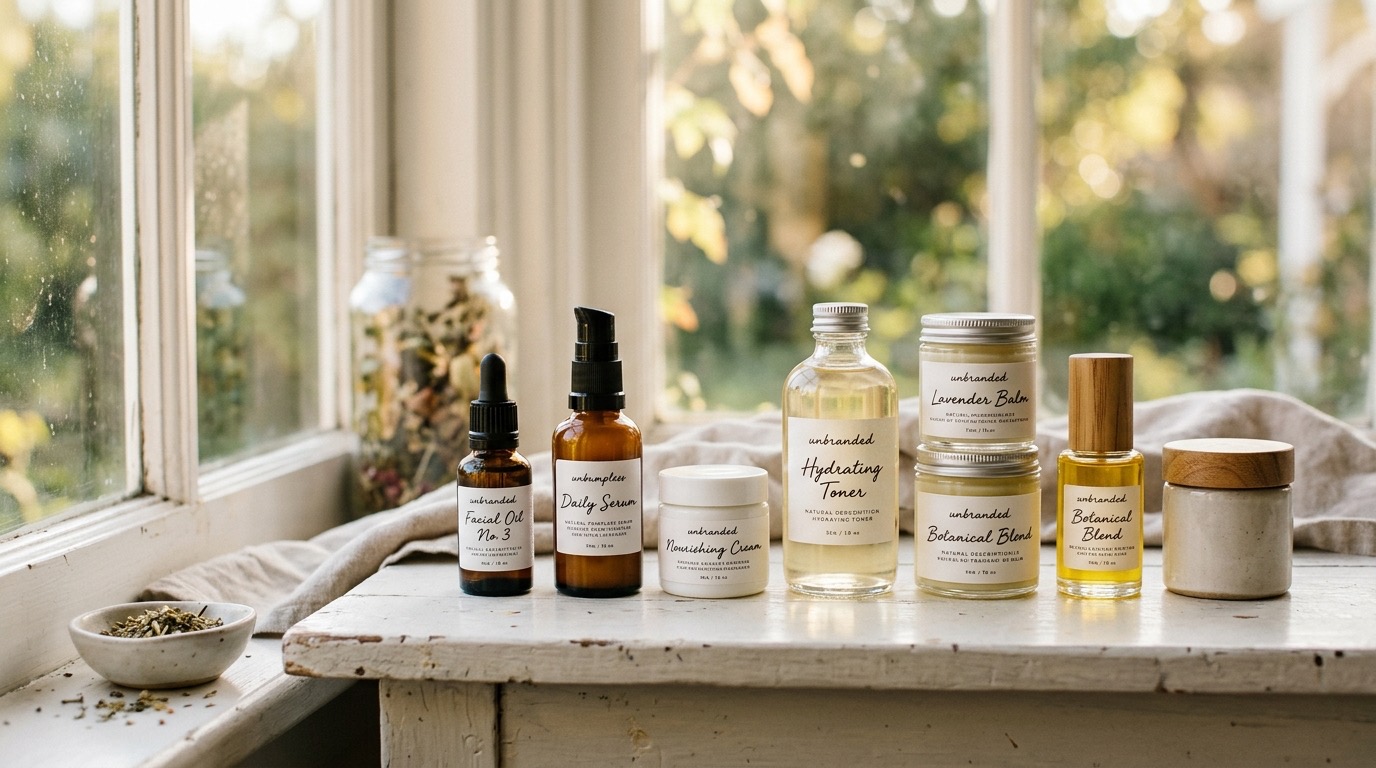
Lifestyle shots, which is the product in use, in context, on a person or in a room, are also harder to DIY because they require staging, styling, and often another person. A lifestyle shot of a skincare product sitting on a bathroom counter with morning light coming through a window is beautiful when it works, but setting that up takes time most owners don’t have.
If you’re launching something new and the photos are the thing that will either make the product feel worth buying or not, hire it out. The cost of bad launch photos isn’t the cost of the shoot. It’s the cost of the inventory that didn’t move because nothing about the listing felt trustworthy.
You can find a local photographer who does product and commercial work without the agency overhead. Someone who shoots with a real camera and understands light and can turn around edited files in a week. For most small batches, that’s a few hundred dollars, not thousands. It’s worth it when the product is right and the photos you’re getting on your own aren’t there.
consistency matters more than perfection
I’ll say this once more because it’s the thing most people get backwards.
One incredible photo surrounded by twelve inconsistent ones doesn’t help you. It just makes the bad ones look worse by comparison.
What moves the needle is a catalog where everything feels like it belongs together. Same light quality, same background, same crop ratio, same general style. When someone scrolls through your products, everything looking like it came from the same place signals organization and care. That’s what you’re going for.
Start with your best-selling products. Get those right first. Then work backward through the catalog, updating the lowest-performing shots over time. You don’t have to redo everything at once.
common questions
how many photos do I need per product?
Minimum three to five. A clean front-facing shot, a back or side shot, and at least one detail shot. If there are multiple colors or variants, each variant needs its own photos. Don’t show one color and say “also comes in navy.”
do I need a DSLR or mirrorless camera?
Not necessarily. A recent iPhone or Android flagship shoots well enough for most ecommerce and web use. Where a proper camera pulls ahead is in low light, tight control over focus depth, and larger prints. If you’re selling online and your current phone is less than three years old, try that first before buying gear.
what’s the most common mistake small business owners make with product photos?
Shooting in bad light and not realizing it. Overhead kitchen lighting, the fluorescent light in a back office, a cloudy corner of a room. All of these produce flat, yellow, or inconsistent results that no amount of editing will fully fix. Move to a window. Shoot during the day. Fix the light first and almost everything else gets easier.
If you’re at the point where DIY isn’t cutting it and you want someone local who understands how photos need to work online, not just look good on a screen, take a look at what I offer. No agency overhead. Straightforward process. Files you can actually use.